

Princess Parrot Care and Feeding

Australia's most desert-adapted aviary parrot, and what that means for how you feed it.

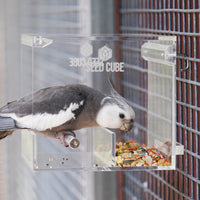
Princess parrot portrait, princess parrot no-mess feeder

Princess Parrot Feeder

The no-mess Seed Cube sized for a princess parrot, and how to mount it in a flight aviary.

View the feeder
Princess parrot perched on a branch, a good fit for the Small Seed Cube size guide

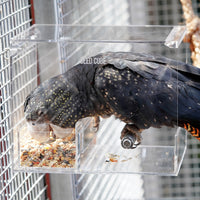
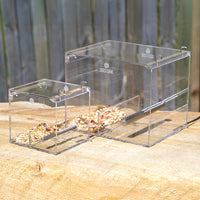
Which size suits a princess parrot?

Small or Large? Match your bird's weight and body size to the right Seed Cube.

Check the size guide
Princess parrot perched, what to feed a princess parrot diet guide

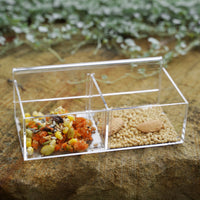
What to feed a princess parrot

The full diet guide: pellets, vegetables, the right seed, and why sunflower is the wrong one.

Read the diet guide
Species hero image
Polytelis alexandrae

Princess Parrot

Australia's most desert-adapted aviary parrot, built for small hard grass seed

Behavioral Profile

Mess Potential Moderate to high
Low High
Vocalization Level Low
Quiet Loud

Species Specifications

Size

About 45 cm long, most of it tail

Weight

Around 113 g on average, roughly 90 to 120 g

Feather Type

Soft, sleek contour feathers with very little powder down, so far less feather dust than a cockatoo or a cockatiel

Lifespan

Commonly around 20 years in captivity, with reports of up to 30 years

Temperament

Gentle, quiet and unusually placid for a parrot, but flighty and easily startled

Origins

Native to the arid interior of Australia, across inland Western Australia, the Northern Territory and northern South Australia, in spinifex grassland and desert woodland of marble gum, desert oak and acacia

Suitable Foods

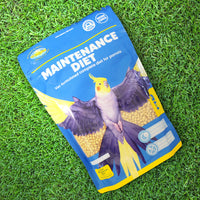
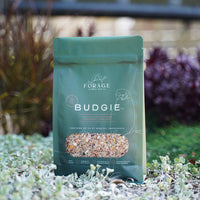
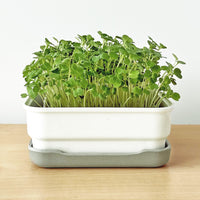
Formulated pellets as the base, fresh vegetables and leafy greens daily, seeding native grasses and safe browse, a small measured serve of millet and small grass seed, and fruit only in modest amounts

Care Level

Beginner to intermediate

Care Notes

Common Feeding Mistakes
The common mistake is feeding a princess parrot from a generic parrot mix led by sunflower and safflower. This is the most desert-adapted parrot in Australian aviculture, and in the wild it eats spinifex, Danthonia and acacia seed, which are small, hard and high in fibre rather than fat. Australian avian vets are clear that no Australian parrot had access to sunflower before European settlement and that a high-fat diet low in vitamins and minerals is behind most physical health problems in pet birds. The second mistake is feeding on the aviary floor. Princess parrots feed on the ground, and a damp dirt-floored aviary is where ground-feeding parrots pick up intestinal worms.
Habitat Requirements
Give a princess parrot length rather than height. They are fast, straight fliers that cover distance in the wild rather than climbing about, so a long flight aviary suits them far better than a tall cage. Keep the floor dry and cleanable, because ground-feeding parrots in damp aviaries carry a much higher worm burden. Use natural perches of mixed thickness and safe native browse, provide shade from hot afternoon sun, and keep them dry in cold wet weather, which is the conditions their desert home never asked them to handle.
Handling & Socialisation
Princess parrots are among the calmest and quietest parrots kept in Australia, which makes them a good aviary bird for people who cannot live with noise. They are not natural cuddlers. Most stay gentle but reserved, and they startle easily, so build trust with slow movement, steady routine and food rewards rather than handling. They are far less destructive than cockatoos, so enrichment is better aimed at foraging than at chewing.