
Bird Health

Heat Stress in Birds: The Signs, and the Three Mistakes That Make It Worse

By Russell Neale, Founder, Seed Cube 6 min read

TL;DR

  • Birds do not sweat. They cool by panting and through bare skin on the legs and face.
  • Fluffed-up feathers on a hot day are a heat sign, not a cold sign.
  • Cool a bird slowly with room-temperature water. Ice and ice packs are dangerous.
  • Panting costs the bird water, so overheating and dehydration arrive together.
  • Weakness, loss of balance or collapse is an emergency. Call an avian vet.

Quick answer

Birds cannot sweat. They shed heat by panting and through bare, unfeathered skin, and on a hot or humid day those mechanisms can fail quickly. The early signs are panting or open-mouth breathing, wings held out from the body and, confusingly, fluffed-up feathers. Move the bird somewhere cool and shaded, mist it lightly with room-temperature water, gently wet its feet and legs, and offer room-temperature water without forcing it to drink. Never use ice-cold water or ice packs, and never point a fan directly at the bird. A bird that is weak, off balance, unable to perch or collapsed needs an avian vet the same day.
Blue and gold macaw drinking from a metal water trough in the shade
Birds have no sweat glands. On a hot day the early signs of heat stress can look like the opposite.

Why birds overheat faster than you expect

Birds have no sweat glands. A bird sheds heat by panting and through the areas of bare, unfeathered skin on its legs and face, while the same feathers that keep it warm in winter work against it in a heatwave.

Bird Vet Melbourne puts the problem plainly: birds rely on evaporative cooling through panting and exposed skin, and when temperatures are high, especially combined with high humidity, those mechanisms can fail very quickly.

There is a second cost that is easy to miss. Panting is not passive. It is active muscular work, it burns energy, and it generates heat of its own while it sheds heat. Research published in the Journal of Experimental Biology has measured water loss through panting in small songbirds at rates exceeding five per cent of body mass an hour.
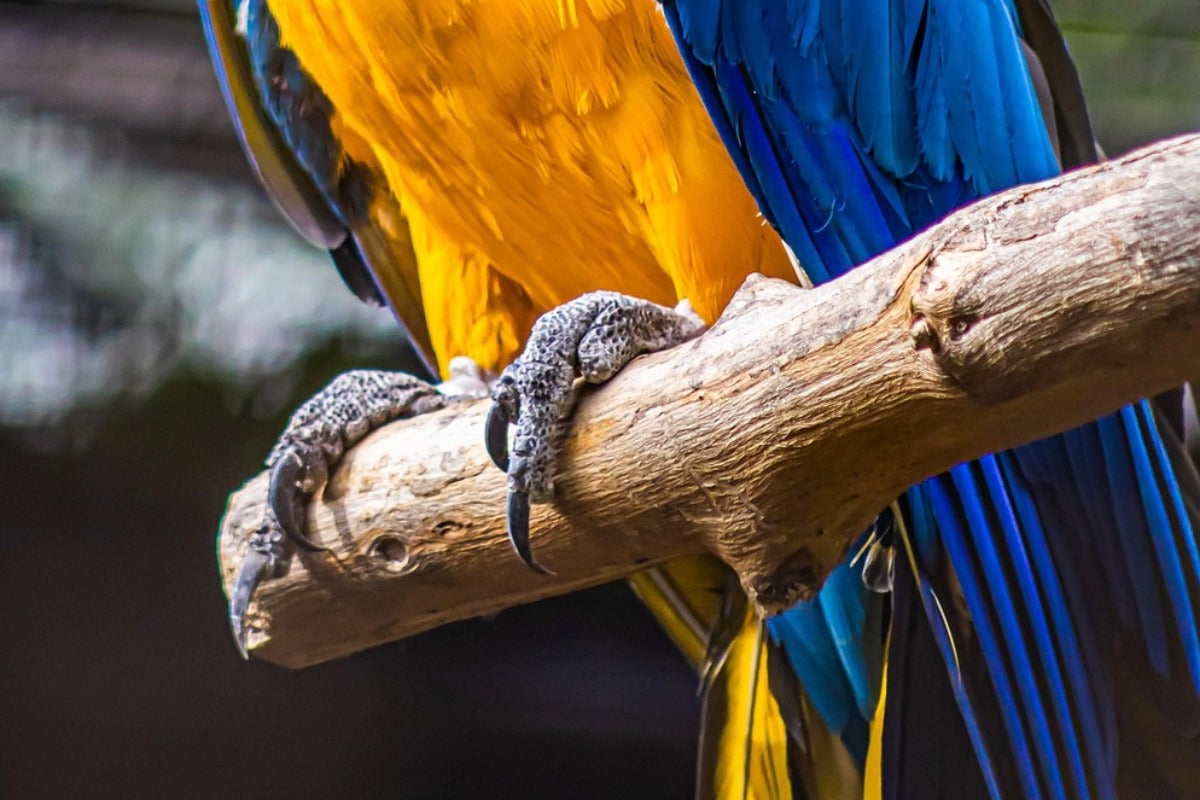
Close view of a macaw's bare, unfeathered feet gripping a branch
Bare skin on the legs and feet is one of the few places a bird can shed heat.

The signs, in the order they tend to appear

Bird Vet Melbourne lists the progression of heat stress as follows, and it applies across parrots, budgies, poultry and wild birds.

  • Fluffed-up feathers, even though the bird is hot
  • Panting, or rapid open-mouth breathing
  • Wings drooping, held away from the body
  • Lethargy, or a reluctance to move
  • Weakness, loss of balance, or an inability to perch
  • In severe cases, neurological signs such as head tilt, collapse or seizures

At the most critical stage a bird may lie flat, become unresponsive and slip into a coma. The early signs are the ones worth learning, because the late ones leave very little time.

Mistake one: reading fluffed feathers as cold

This is the one that catches people out, and it sits first on the vet list for a reason. Fluffing is the posture most owners associate with a cold or unwell bird, so the instinct is to cover the cage, shut the window or move the bird somewhere warmer. On a hot day that is the opposite of what the bird needs.

Read the posture alongside everything else in the room. Check the temperature, check for panting, check whether the wings are held out from the body. One sign on its own tells you very little. The combination tells you a lot.

Mistake two: cooling the bird too fast

Heat stress is an emergency, but rapid cooling carries its own risk. The first-response sequence from Bird Vet Melbourne is deliberate and gradual.

  • Move the bird to a cool, quiet, shaded area straight away
  • Lightly mist it with room-temperature water until the skin is damp
  • Gently wet the feet and legs, which are efficient at shedding heat
  • Offer room-temperature drinking water, but do not force fluids

What not to do matters just as much. Do not use ice-cold water, and do not put ice packs directly on the bird.

Mistake three: pointing the fan straight at the cage

Air movement helps, but Bird Vet Melbourne is specific that a fan should never blow directly onto the bird. Position it to move air through the room or the aviary rather than across the bird itself.

Two more from the same list are worth stating plainly. Never leave a bird in a car, even briefly. And a cage should never sit in direct sunlight, on any day, in any season.

Set the aviary up before the forecast turns

Almost everything useful happens before the hot day, not during it. For outdoor aviaries, Bird Vet Melbourne recommends:

  • Shade cloth to cut radiant heat
  • Misting or sprinkler systems, ideally on timers for the hottest part of the day
  • Multiple water sources in large, stable containers, because a larger volume of water heats up more slowly
  • Frequent water changes to keep it clean and cool

For significant heat events the recommendation is to bring birds indoors rather than leave them in an outdoor aviary. Collapsible dog crates are suggested as a quick way to set up emergency indoor caging, which is a practical thing to own before you need it rather than on the day.

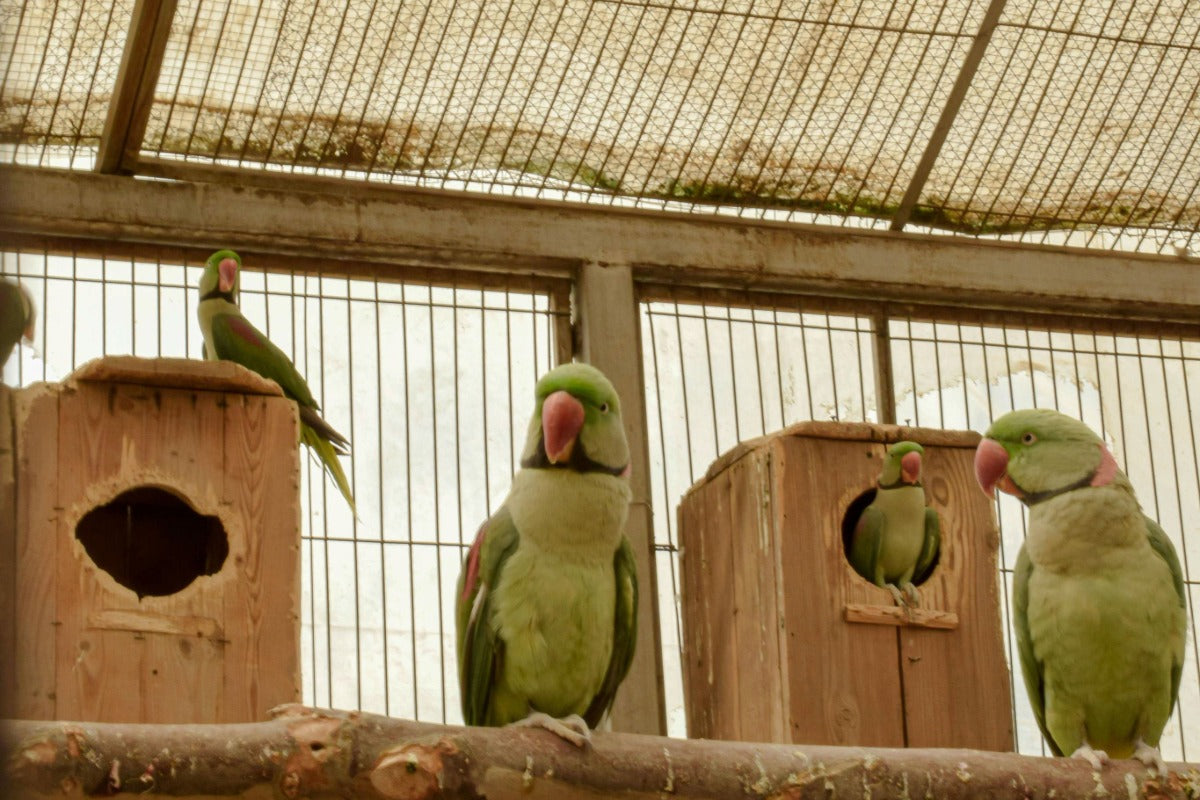
Alexandrine parrots perched under the shade cloth roof of a covered outdoor aviary
Shade over the aviary is the single most effective thing you can set up before a hot day.

Feeding changes in hot weather

Heat changes how food behaves, and the guidance is mostly about spoilage and moisture.

  • Food spoils rapidly in hot weather, so offer smaller amounts more frequently
  • Dry foods last longer through the day, while fresh foods contribute to hydration
  • Chilled or frozen fruit and vegetables help a bird cool down as it eats
  • Produce served with the skin left on stays fresh longer and holds more moisture

When it is a vet call, not a home fix

Shade, light misting and water are a reasonable first response for a bird that is panting but still alert and responsive. They are not the answer for a bird that has crossed into weakness, loss of balance, an inability to perch, or any neurological sign. That bird needs an avian vet urgently.

Bird Vet Melbourne notes that severely affected birds may need fluids, electrolytes, oxygen and carefully controlled temperature in clinic. Those are veterinary interventions and veterinary decisions, and they are not something to improvise at home.

For wild birds, RSPCA Australia notes that heat-stressed animals often behave abnormally, may lose balance, collapse or appear confused, and that birds which normally live in trees may be found on the ground. Their guidance is to keep handling to an absolute minimum, wrap the bird loosely in a towel, place it in a cardboard box, offer water to drink and mist lightly, then leave it somewhere dark, cool and quiet while you seek advice. Record exactly where you found it so it can be returned there if it recovers.

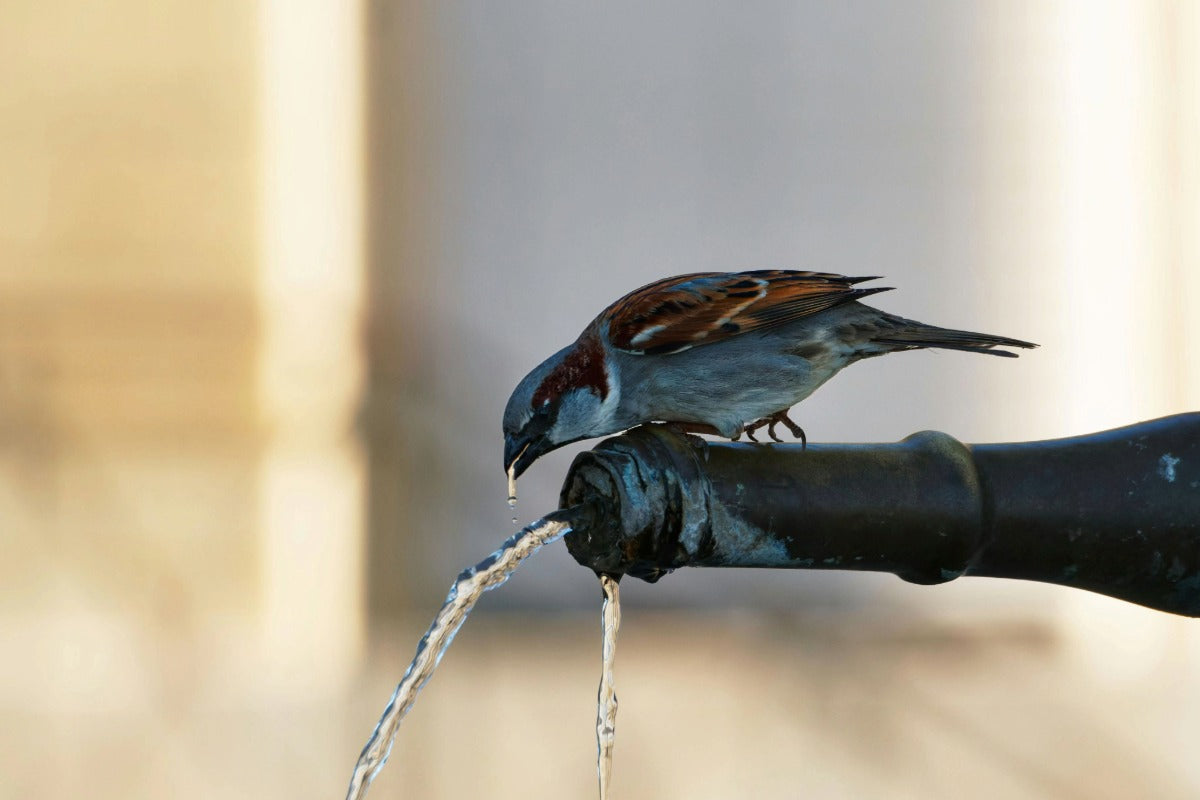
Small wild bird drinking from a running water spout
Access to clean water in shade matters more to a wild bird on a hot day than anything else you can offer.

Key facts

  • Zero

    Sweat glands in a bird. Cooling is by panting and bare skin

  • 5%

    Of body mass per hour, measured water loss from panting in small songbirds

  • Room temp

    The only safe water temperature for cooling a heat-stressed bird

  • 1300 596 457

    Wildlife Rescue Australia, 24-hour line for wild birds

Frequently asked questions

What are the first signs of heat stress in a bird?

Fluffed-up feathers despite the heat, panting or open-mouth breathing, and wings held out and away from the body. Lethargy and a reluctance to move usually follow. Weakness, loss of balance or an inability to perch means the bird has moved past the early stage and needs an avian vet.

Why is my bird fluffed up when it is hot?

Fluffing is normally read as a cold or unwell bird, which is exactly why it catches owners out in summer. Bird Vet Melbourne lists fluffed-up feathers as a heat stress sign in its own right. Judge it alongside the room temperature and the other signs rather than on its own, and do not cover or warm the bird on a hot day.

Can I put ice in my bird water?

Avoid it. Veterinary guidance for a heat-stressed bird is room-temperature water only, and specifically not ice-cold water or ice packs against the bird, because rapid cooling carries its own risk. For ordinary drinking water in hot weather the more useful approach is a larger container kept in shade, since a bigger volume warms up more slowly, changed often to keep it clean.

How do I cool down an overheating bird?

Move it somewhere cool, quiet and shaded. Mist it lightly with room-temperature water until the skin is damp, gently wet the feet and legs, and offer room-temperature water without forcing it to drink. Do not use ice, and do not aim a fan directly at the bird. If it does not improve quickly, or if it is weak or unsteady, call an avian vet.

Is it safe to point a fan at my bird?

Not directly. Fans are useful for moving air through a room or an aviary, but veterinary advice is that they should never blow straight onto the bird. Set the fan to circulate air in the space instead.

What temperature is too hot for a pet bird?

There is no single number that works for every bird. Humidity matters as much as the temperature, because high humidity blunts the evaporative cooling a bird depends on, and shade, airflow, age, health and body condition all change the picture. Rather than watching for a threshold, watch the bird. Panting, drooping wings and fluffing on a hot day mean it is already working hard to cope, whatever the thermometer says.

Should I mist or bathe my bird in hot weather?

Light misting with room-temperature water is part of the standard first response for an overheating bird, and misting or sprinkler systems on timers are recommended for outdoor aviaries during the hottest part of the day. Keep it light rather than soaking, and never use cold water.

What should I do if I find a wild bird on the ground in a heatwave?

A bird that normally lives in trees sitting on the ground is one of the signs RSPCA Australia lists for heat stress in wildlife. Keep handling to an absolute minimum, wrap it loosely in a towel, place it in a cardboard box, offer water and mist lightly, then leave it somewhere dark, cool and quiet while you seek advice. Note the exact location so it can be released back there. Wildlife Rescue Australia can be reached 24 hours on 1300 596 457. Do not handle bats or flying foxes.

Sources

  1. Bird Vet Melbourne, Heat Stress In Birds (avian veterinary practice, Victoria), January 2026Symptoms, prevention, aviary setup, first-response sequence and the caution against rapid cooling.
  2. RSPCA Australia Knowledgebase, How can I help wildlife during a heatwave, updated November 2025Recognising heat-stressed wildlife, safe handling, and providing water without creating other risks.
  3. Journal of Experimental Biology, avian thermoregulation in the heat: resting metabolism, evaporative cooling and heat tolerancePanting as an active, metabolically costly process, and measured rates of evaporative water loss in small birds.

About the author

Russell Neale
Founder, Seed Cube

Russell Neale is the founder of Seed Cube, a bird-feeding brand he started in 2024 in the Hills District of NSW. A long-time bird owner himself, with three birds including a 12-year-old hand-raised Alexandrine, Russell built Seed Cube after years of frustration with messy, flimsy and poorly designed feeders.

Seed Cube makes practical, durable products that keep feeding cleaner, easier and safer for pet birds, and that are designed to last rather than end up in landfill. The brand works closely with Hills Wildlife Sanctuary, and everything it makes is BUILT FOR BIRDS™.

Heat is one of the few emergencies where the instinctive response often makes things worse. A hot bird can look cold, the coldest water in the house is the wrong water, and a fan aimed straight at the cage is not the help it appears to be. Most of the work happens before the forecast turns: shade over the aviary, several large water containers kept out of the sun, smaller feeds through the day so nothing spoils, and a plan for bringing birds indoors. Learn the progression of signs, and if a bird is weak, unsteady or unable to perch, treat it as an avian vet call the same day.

Browse the bird care guides