






Corella Care and Feeding
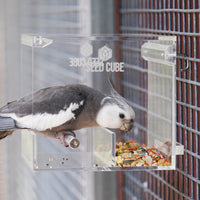
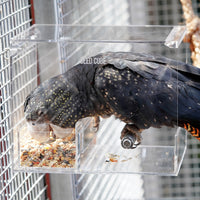
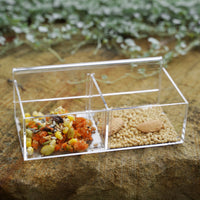
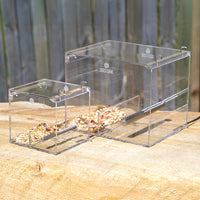
How to feed, house and care for a corella, plus the right no-mess Seed Cube for a large cockatoo that digs for its food.

Which size suits a corella?
Match your bird's weight to the right Seed Cube. Corellas take the Large.
Check the size guide

What to feed a corella
The full corella diet guide: pellets, vegetables, the seed layer and foraging.
Read the diet guide
Cacatua sanguinea and Cacatua tenuirostris
Corella
White Australian cockatoo built to dig for its food
Behavioral Profile
Mess Potential
High
Low
High
Vocalization Level
Very high
Quiet
Loud
Species Specifications
Size
35 to 41 cm long
Weight
370 to 640 g depending on the species
Feather Type
Powder-down feathers that shed fine white dust
Lifespan
Commonly 40 to 50 years in captivity
Temperament
Confident, clever, playful and very loud
Origins
Native to Australia. Little corellas range across most of the mainland, long-billed corellas across the south east
Suitable Foods
Formulated pellets as the base, fresh vegetables and leafy greens daily, sprouted seed and safe native browse, a small measured serve of quality seed, with fruit as an occasional treat
Care Level
Intermediate to advanced
Care Notes
Common Feeding Mistakes
The classic corella mistake is copying the wild diet. Wild corellas eat mostly grain and grass seed, so owners fill a bowl with seed and call it natural. Cockatoo species are very prone to obesity on seed-heavy diets, and the fatty lumps that follow can interfere with the bird's movement. Build the diet on formulated pellets and fresh vegetables, keep seed to a small measured serve, and make the bird work for it rather than leaving a full bowl out all day.
Habitat Requirements
Corellas are large, powerful chewers, so give them the biggest cage or aviary you can, in powder-coated or stainless steel rather than a painted or galvanised finish. Add natural perches of different thickness, plenty of safe chew material, and foraging enrichment that gives them something to dig at. Keep to a natural day length and darken the cage at night, because long light hours push moulting and hormonal behaviour.
Handling & Socialisation
Corellas are among the loudest and most demanding parrots kept in Australia, and they bond hard. Daily interaction, training and out-of-cage time are essential rather than optional, because a bored corella screams, chews and can start plucking. Keep sessions short, positive and consistent, set kind boundaries early to head off nipping, and give the bird jobs to do so its attention is not entirely on you.