
Feeding and Diet

What to Feed a Corella: A Complete Diet Guide

By Russell Neale, Founder, Seed Cube 7 min read

TL;DR

  • Build the diet on formulated pellets, not grain or seed
  • Fresh vegetables every day, fruit only as a treat
  • Keep seed to a small measured serve, sunflower is 49 per cent fat
  • Make a corella forage for food instead of emptying a bowl

Quick answer

Feed a corella a diet built on formulated pellets, with fresh vegetables and leafy greens every day and only a small measured serve of quality seed. Australian avian vets recommend roughly 40 to 70 per cent pellets, 20 to 50 per cent vegetables and sprouted seed, 7 to 15 per cent fruit, 10 to 15 per cent seed mix and 1 to 5 per cent treats for cockatoos, galahs and corellas. Just as important is how you serve it. Corellas are diggers, so spread the food through foraging toys and an enclosed feeder rather than leaving a full bowl out all day.

Long-billed corella digging for roots in grass, the wild paddock diet a corella should not be fed at home
Corellas dig for their food in the wild, and a pet corella still needs to work for it.

What to feed a corella: the short answer

Feed a corella a diet built on formulated pellets, with fresh vegetables and leafy greens every day and only a small measured serve of quality seed. Australian avian vets who treat cockatoos, galahs and corellas recommend roughly 40 to 70 per cent premium commercial pellets, 20 to 50 per cent vegetables, sprouted seed and safe native browse, 7 to 15 per cent fruit, 10 to 15 per cent quality seed mix, and 1 to 5 per cent treats.

The part most guides leave out is how you serve it. A corella is built to dig its food out of the ground, so a full bowl left out all day is the wrong delivery system even when the contents are right. Spread the food through foraging toys and an enclosed feeder, and make the bird work for it.

Why the paddock diet is the wrong model

Ask what a corella eats and almost every answer describes the wild bird: grain, grass seed, corms and bulbs. That is accurate, and it is exactly why so many pet corellas end up overweight.

Wild corellas eat what Australia planted. BirdLife Australia's Birds in Backyards notes that about 90 per cent of the long-billed corella's diet now comes from introduced food plants, mostly grain crops and the corms of onion grass. Grain is not what suits a corella. It is what happens to be in front of it.

The other half of the picture is the work. A wild corella walks a paddock in a flock and levers corms out of hard ground with a bill built for the job, and the long-billed corella's elongated upper mandible is exactly that: a digging tool. Your bird has the same tool and a bowl of seed it can empty in a few minutes.

The seed-only trap: obesity, fatty lumps and the beak

Obesity is very common in cockatoo species, and Australian avian vets link it directly to diets high in seed. Fatty lumps develop and can interfere with the bird's movement. In many cases the lump reduces once the bird is moved onto a more appropriate diet, but any lump should be examined, because some are more serious than fat.

The fat load is easy to underestimate. RSPCA Australia points out that sunflower seed is about 49 per cent fat, roughly three times the fat in an average chocolate bar, and many other seeds are similar.

There is a slower consequence that corella owners rarely connect back to the food bowl. A chronically high-fat, high-cholesterol diet drives liver disease, and an overgrown beak is one of its visible signs. On a bird whose beak is its main tool, that matters. Trims are typically needed every six to eight weeks while the underlying problem continues, and may stop after one or two once the cause is corrected.

Pellets: the base of the diet

A formulated pellet is the base because it removes the bird's ability to pick out the fatty bits. Corellas are excellent selective feeders: given a mixed bowl they take the sunflower and the peanuts and leave the rest, so the diet the bird actually eats is far richer than the diet you served.

Aim for pellets at 40 to 70 per cent of what your corella eats. RSPCA Australia's general guidance for pet birds runs along the same lines, at roughly 60 per cent formulated diet and 40 per cent vegetables, with seed and fruit used as treats.

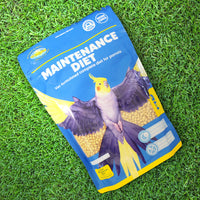
Choose a pellet sized for a large parrot. Vetafarm Nutriblend Large is a widely available Australian option for a bird this size. If your corella has a health condition, ask your avian vet which formula suits it.

Vegetables, greens and native browse

Vegetables do the work seed cannot. Serve them fresh every day and make them the second largest part of the diet after pellets, at 20 to 50 per cent.

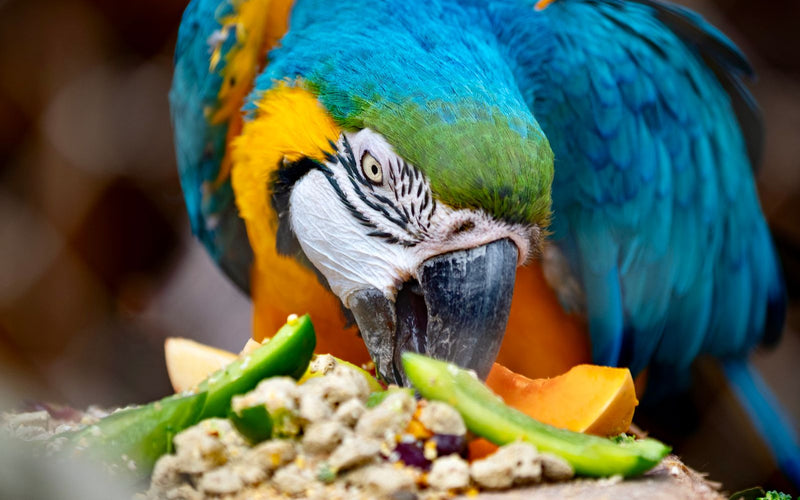
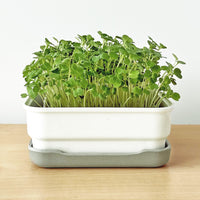
Good choices for a corella include capsicum, broccoli, corn, carrot, zucchini, squash, spinach, pumpkin, sweet potato, beans and peas. Sprouted seed counts here, and so does safe native vegetation: most Australian blossoms, gum nuts and branches are fine, provided you collect them somewhere wild bird droppings have not landed on them.

Fruit is a smaller slice at about 7 to 15 per cent. Melon, berries, banana, grapes, stone fruit, pear and apple all work. Remove apple pips and stone-fruit pits before serving.

The seed layer, and where the Forage blend fits

Seed is not banned. It belongs at 10 to 15 per cent of the diet, measured out rather than topped up, plus 1 to 5 per cent for training treats such as unsalted nuts, cooked pasta, egg or brown rice.

Serve that seed layer as a portion, not as a standing bowl. For a corella's weight, that single change does more than swapping brands ever will.

Foraging: the part every corella diet page skips

Wild parrots spend more than half their day finding and handling food. A captive parrot eating from an open bowl is finished in under an hour, and work cited by LafeberVet puts birds on a pelleted diet at roughly 30 to 72 minutes a day. The rest of that time has to go somewhere, and in a corella it usually goes into screaming, chewing and, at worst, plucking.

Foraging solves two problems with one change. It slows the intake, so the bird is less likely to overeat, and it gives an intelligent, long-lived cockatoo a job. Hide portions of the day's pellets in cardboard tubes and paper parcels, thread some through safe browse, and serve the rest in an enclosed feeder the bird has to reach into rather than an open dish.

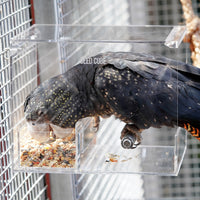
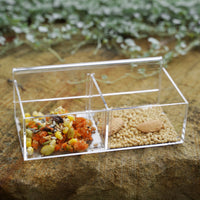
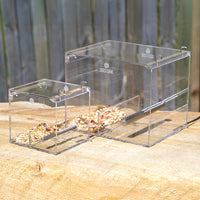
That is what the Seed Cube is for. Mounted on the cage bars, it keeps the scattered husks contained and makes the bird work slightly for each mouthful. It does not replace enrichment, but it turns the main meal into a small foraging task instead of a free lunch.

Foods to avoid, and a word on wild corellas

Never offer avocado, chocolate or cocoa, onion, alcohol, caffeine, salty or fried food, raw dough, or dairy. Avocado in particular can be fatal to parrots in small amounts. Skip iceberg lettuce and celery, which are mostly water and displace better food. Plain bread is not toxic in an occasional scrap, but mouldy bread is dangerous and bread is not food for a corella.

If the corellas you are asking about are the flock on your local oval rather than a bird in your lounge room, the answer is different. Little corellas are managed as a problem species in parts of Australia and are listed as unprotected in South Australia, where councils actively work to limit the food and water available to large flocks. Do not feed them. Everything else in this guide is written for a pet or aviary corella.

How to switch a seed-addicted corella onto pellets

Most corellas arrive on seed and resist the change, so plan in weeks rather than days.

Start by mixing a small amount of pellets into the seed and raising the ratio gradually. Offer pellets first thing in the morning when the bird is hungriest, and hold the seed serve back until later in the day. Keep offering vegetables even while they are being refused, because acceptance often arrives suddenly after weeks of rejection.

Weigh your bird on kitchen scales through the changeover, and stop reducing seed if it loses weight. Never starve a bird onto a new food. Book a check with an avian vet before you start if your corella is older, overweight or unwell, and keep to check-ups every six to twelve months regardless, because birds hide illness well.

Key facts

  • 40 to 70%

    Of a corella's diet should be formulated pellets

  • 49%

    Fat content of sunflower seed

  • 370 to 640 g

    Healthy adult corella weight range

  • Over 50%

    Of the wild day a parrot spends foraging

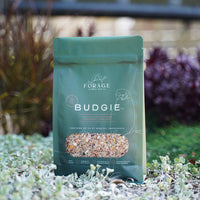
Species-matched blendForage Gourmet Seed - Galah, Corella & Cockatoo Specialty Blend-Bird Seed-Seed Cube

Forage Gourmet

Forage Gourmet Seed - Galah, Corella & Cockatoo Specialty Blend

$15.99

The Galah, Corella and Cockatoo blend is made for the measured seed layer of a corella's diet, not the whole of it. Australian made from 100 per cent human-grade ingredients, it encourages natural foraging. It does contain sunflower and peanuts, so weigh it out and pair it with a pellet base and daily vegetables.

Shop the Galah, Corella & Cockatoo blend
Forage Gourmet Seed - Galah, Corella & Cockatoo Specialty Blend-Bird Seed-Seed Cube
Forage Gourmet Seed - Galah, Corella & Cockatoo Specialty Blend $15.99
Shop the Galah, Corella & Cockatoo blend

Frequently asked questions

What do corellas eat in the wild?

Grass seeds and grain are the bulk of it, along with corms, bulbs and roots dug out of the ground, especially onion grass, plus some insects. Long-billed corellas now take roughly 90 per cent of their diet from introduced plants. It is a useful picture of how corellas feed, but a poor template for what goes in a pet bird's bowl.

How much should I feed a corella each day?

There is no single gram figure, because corellas range from about 370 g to 640 g. Serve a measured amount rather than filling the bowl, split it across the day, and weigh your bird weekly. If it is gaining, cut the seed and treats first, not the pellets or vegetables.

Can corellas eat sunflower seed?

In small amounts as a training treat, yes. As a daily food, no. Sunflower seed is about 49 per cent fat, roughly three times an average chocolate bar, and cockatoo species are among the parrots most prone to obesity and fatty lumps.

Can corellas eat bread?

A plain unsalted scrap now and then will not hurt, but bread has no real place in the diet and mouldy bread is genuinely dangerous to birds. If you want an easy treat, use a piece of vegetable or an unsalted nut instead.

What vegetables are best for a corella?

Capsicum, broccoli, corn, carrot, zucchini, squash, spinach, pumpkin, sweet potato, beans and peas are all good. Sprouted seed counts too, and so do safe Australian blossoms, gum nuts and branches, as long as you collect browse somewhere wild bird droppings have not fallen on it.

What foods are toxic to corellas?

Avocado, chocolate and cocoa, onion, alcohol, caffeine, raw dough and dairy. Avocado can cause heart failure in parrots at small doses. Remove apple pips and stone-fruit pits before serving the fruit.

My corella will not eat pellets. What do I do?

Go slowly. Mix a little pellet into the seed and raise the ratio over weeks, offer pellets first thing when the bird is hungriest, and hold the seed back until later in the day. Weigh the bird through the change and stop reducing seed if it drops weight. Talk to an avian vet before starting if the bird is old, overweight or unwell.

Should I feed the wild corellas in my yard?

No. Little corellas are managed as a problem species in parts of Australia and are listed as unprotected in South Australia, where councils work to reduce the food and water available to large flocks. Feeding them makes the flock problem worse for everyone, the birds included.

Sources

  1. The Unusual Pet Vets, Cockatoos, Galahs and Corellas care sheet, and Avian Beak OvergrowthDiet proportions for cockatoo species, obesity and fatty lumps, and high-fat diet as a driver of liver disease and improper beak wear
  2. RSPCA Australia Knowledgebase, What should I feed my birds?Formulated diet and vegetable proportions, and the fat content of sunflower seed
  3. LafeberVet, Foraging as a Means of Behavior ModificationWild versus captive foraging time and its link to obesity and behaviour problems
  4. BirdLife Australia, Birds in Backyards, Long-billed CorellaWild diet, size and weight data for Australian corellas

About the author

Russell Neale
Founder, Seed Cube

Russell Neale is the founder of Seed Cube, a bird-feeding brand he started in 2024 in the Hills District of NSW. A long-time bird owner himself, with three birds including a 12-year-old hand-raised Alexandrine, Russell built Seed Cube after years of frustration with messy, flimsy and poorly designed feeders.

Seed Cube makes practical, durable products that keep feeding cleaner, easier and safer for pet birds, and that are designed to last rather than end up in landfill. The brand works closely with Hills Wildlife Sanctuary, and everything it makes is BUILT FOR BIRDS™.

A corella can live 40 to 50 years, and what you put in the bowl for those decades decides how many of them are healthy ones. Make pellets and vegetables the base, keep the seed layer small and measured, and give the bird something to work at instead of a standing bowl. Feed it cleanly in a Large Seed Cube, and see an avian vet if you are changing the diet, or if you spot a lump or an overgrown beak.

See the Corella Seed Cube feeder