






Australian King Parrot Care and Feeding
A wet-forest parrot, not a dry-inland one. Diet, housing, enrichment and health for king parrots.

Which size suits a king parrot?
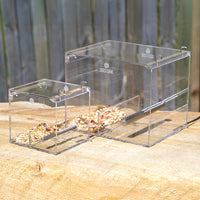
Match your king parrot to the right Seed Cube size.
Check the size guide

What to feed a king parrot
The full king parrot diet guide: pellets, vegetables, native browse and the seed layer.
Read the diet guide
Alisterus scapularis
Australian King Parrot
Wet-forest parrot that feeds high in the canopy, not on the ground
Behavioral Profile
Mess Potential
High
Low
High
Vocalization Level
Moderate
Quiet
Loud
Species Specifications
Size
41 to 43 cm long, average 42 cm
Weight
195 to 275 g, average about 212 g
Feather Type
Sleek contour feathers with no powder down, so far less feather dust than a cockatoo
Lifespan
Commonly around 25 years in captivity, with a documented record of 26.6 years
Temperament
Calm, quiet and watchful for a parrot, but shy and slow to trust
Origins
Native to eastern Australia, from Cooktown in Queensland south to Port Campbell in Victoria, in rainforest and wet sclerophyll forest
Suitable Foods
Formulated pellets as the base, fresh vegetables and leafy greens daily, safe native browse with blossom and green seed pods, a small measured serve of quality seed, and fruit in modest amounts
Care Level
Intermediate
Care Notes
Common Feeding Mistakes
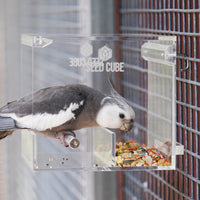
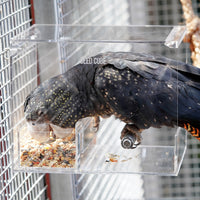
The common mistake is feeding a king parrot like a budgie or a galah. Australia's dry inland parrots evolved on low-fat grass seed, and the standard Australian parrot diet advice is written for them. King parrots come from wet forest and eat seed, fruit, berries, buds and blossom taken in the canopy, so a bowl of grain-heavy mix with sunflower in it is both the wrong food and the wrong feeding position. Build the diet on formulated pellets and fresh vegetables, keep seed to a small measured serve, and feed at height rather than on the cage floor.
Habitat Requirements
Give a king parrot the longest flight you can rather than the tallest, because that 42 cm body is mostly tail and they fly straight and fast rather than climbing about. Use powder-coated or stainless steel, natural perches of mixed thickness, and safe native browse from wattle, gum, bottlebrush, melaleuca and lilly pilly for chewing. They handle cool weather well but want shade and shelter from hot afternoon sun.
Handling & Socialisation
King parrots are quieter and less demanding than most parrots, which suits people who cannot live with a screaming cockatoo, but they are also shy and slower to trust. Build the relationship with calm routine, short sessions and food rewards rather than forced handling, and accept that many stay affectionate but reserved. They are noticeably less destructive than cockatoos, so enrichment can be about foraging rather than damage control.