
Feeding and Diet

What to Feed a Caique: A Complete Diet Guide

By Russell Neale, Founder, Seed Cube 5 min read

TL;DR

  • Base the diet on quality pellets, about 75% of intake.
  • Offer vitamin A-rich vegetables ahead of the sweet fruit caiques beg for.
  • Keep seed, sprouts and nuts to a small foraging treat layer, roughly 10%.
  • Avoid avocado, chocolate and onion, and go easy on fatty seeds and nuts.
  • Make your caique forage for its food to burn energy and cut mess.

Quick answer

Feed a caique around three-quarters quality formulated pellets and one-quarter fresh vegetables with a little fruit, plus a small foraging layer of sprouted seed and the occasional nut. Lead with vitamin A-rich vegetables over sugary fruit, keep fatty seeds and nuts to treats, and make your caique forage for its food to burn energy and prevent obesity.

Black-headed caique portrait, what to feed a caique diet guide
A caique's health depends on diet and foraging as much as ingredients.

The short answer: what to feed a caique

Feed a caique a diet built on quality formulated pellets, making up around three-quarters of what it eats, with the remaining quarter fresh vegetables and a little fruit. Add a small foraging layer of sprouted seed, with the occasional nut as a treat rather than the main meal. Caiques are small, stocky and highly food-motivated, so portion control and foraging matter as much as the ingredients you choose.

Why a seed-only diet is a caique's biggest risk

An all-seed diet is the single most common cause of diet-related illness in pet parrots, and a food-loving caique is especially exposed. Seed is high in fat and low in the vitamins, minerals and protein a bird needs. Fed on seed alone, caiques are prone to obesity, fatty liver disease and deficiencies in vitamin A and calcium, according to RSPCA Australia. Birds also pick out the fatty favourites like sunflower and leave the rest, so the real diet is even worse than the mix on the label.

Pellets: the foundation of a caique's diet

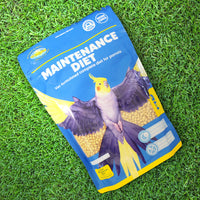
A good formulated pellet should be the base of the diet, roughly 60 to 75%. Pellets are balanced in every bite, so your caique cannot pick out only the fatty bits. Choose a quality pellet with no artificial colours or preservatives. In Australia, brands such as Vetafarm and Passwell are widely used and easy to find. Offer pellets fresh each day. If your bird is new to them, see the transition steps below, as caiques are curious and usually convert faster than most parrots.

Vegetables over fruit: the caique twist

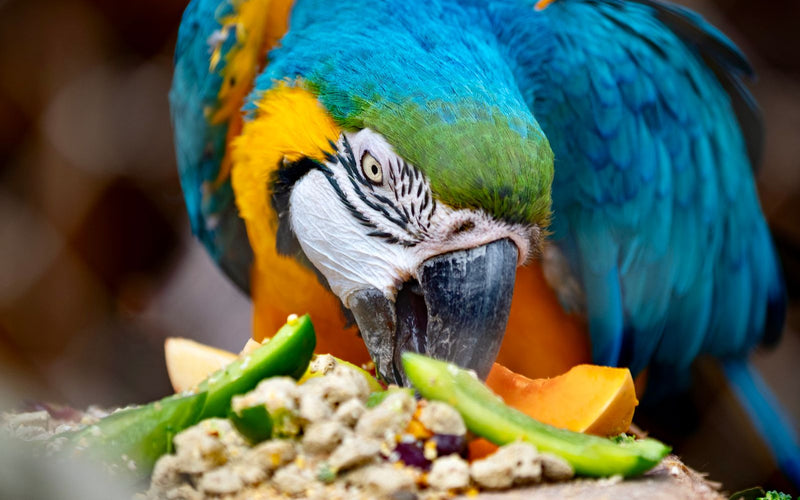
Here is where many caique owners go wrong. Caiques love fruit and will happily gorge on sweet mango, banana and grapes while ignoring their vegetables. But it is vegetables that carry the vitamin A a seed-fed parrot most often lacks. Vitamin A deficiency is one of the most frequently diagnosed nutritional problems in pet birds, showing up as crusty nares, mouth infections and poor feathering. Lead with orange and red vegetables like carrot, sweet potato, capsicum and pumpkin, plus dark leafy greens such as kale and silverbeet. Keep sugary fruit to a small daily portion, offered after the vegetables.

Seed, sprouts and nuts: the treat layer

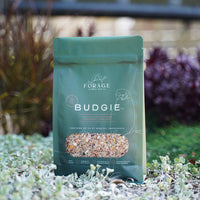
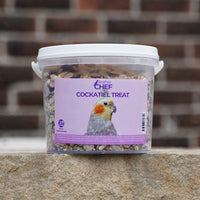
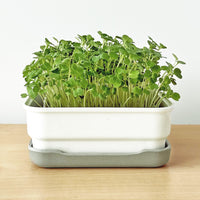
Seed is not banned, it just is not the main event. A small foraging mix of sprouted seed adds variety and natural texture, and a single nut makes a great training reward. Sprouting lowers seed's fat and lifts its nutrition, which suits a bird watching its weight. Keep the whole seed, sprout and nut layer to roughly 10% of the diet. Seed Cube's Conure and Quaker Forage Gourmet blend is sized right for caiques and works well as this foraging layer over a pellet base.

Foraging: feed the clown's energy

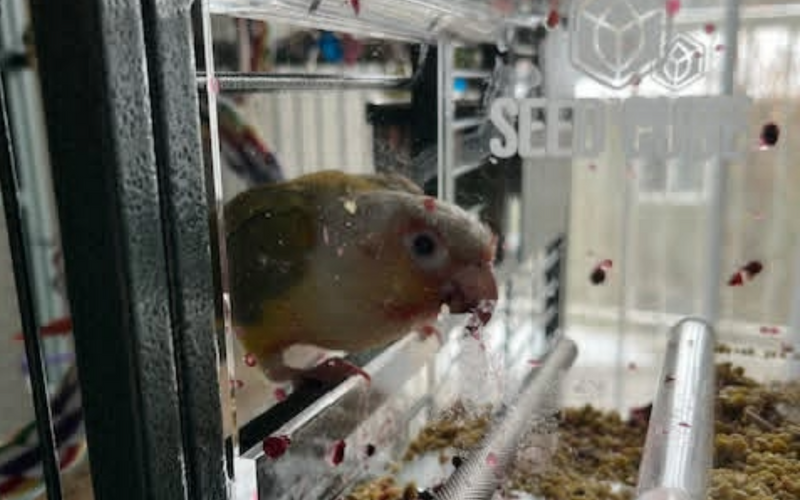
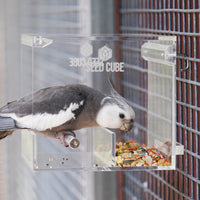
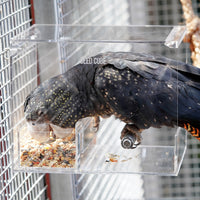
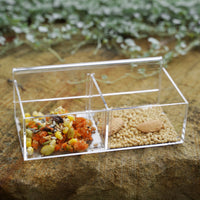
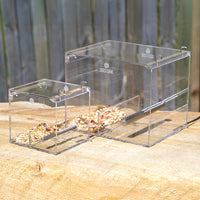
Wild parrots spend 40 to 75% of their day searching and working for food. A caique is one of the busiest, most playful parrots kept as a pet, nicknamed the clown of the bird world, and a bored caique gets loud, nippy and destructive. Turning meals into foraging burns that energy and slows a greedy eater down. This is exactly what a Small Seed Cube is built for: it holds a pellet-and-vegetable mix in an enclosed feeder your caique has to work at, which also keeps the famous caique mess off your floor.

Foods to avoid

Some foods are never safe for a caique. Avocado, chocolate, caffeine, alcohol, onion and garlic, and very salty or sugary human food can all cause serious harm. Remove fruit seeds and pips from apples, pears and stone fruit. And go easy on fatty seeds and nuts like sunflower and peanuts: they are not toxic, but in a bird this prone to weight gain they are a fast track to obesity and fatty liver.

How to switch a caique to a better diet

Change the diet gradually. Mix a little pellet into the seed and slowly shift the ratio over one to several weeks, watching that your bird keeps eating and holds its weight. Offer fresh vegetables every day, even if they are ignored at first, since caiques often need repeat exposure before they try something new. Use foraging to your advantage, as a curious caique will investigate food it has to work for. For the full care picture, see the caique care guide. If your bird is unwell or losing weight, speak to an avian vet.

Key facts

  • 150 to 185 g

    Typical caique weight

  • ~75%

    Of the diet should be pellets

  • 25 to 40 yrs

    Caique lifespan in good care

  • 40 to 75%

    Of a wild parrot's day spent foraging

Forage GourmetForage Gourmet Seed - Conure & Quaker Specialty Blend-Bird Seed-Seed Cube

Feed the foraging drive

Forage Gourmet Seed - Conure & Quaker Specialty Blend

$15.99

Seed Cube's Conure and Quaker Forage Gourmet blend is a sized-right foraging mix for caiques, best offered as the seed-and-treat layer over a pellet base.

Shop the blend
Forage Gourmet Seed - Conure & Quaker Specialty Blend-Bird Seed-Seed Cube
Forage Gourmet Seed - Conure & Quaker Specialty Blend $15.99
Shop the blend

Frequently asked questions

What do you feed a caique?

A caique does best on about three-quarters quality formulated pellets and one-quarter fresh vegetables and a little fruit, plus a small foraging layer of sprouted seed and the odd nut as a treat. Pellets give balanced nutrition, vegetables supply vitamin A, and foraging keeps this busy bird occupied.

Can caiques eat fruit?

Yes, but in moderation. Caiques love sweet fruit like mango, banana and berries and will often choose it over vegetables. Offer a small portion daily, after the vegetables, so fruit does not crowd out the more important veg. Too much sugary fruit adds empty calories to a bird prone to weight gain.

What vegetables are best for a caique?

Lead with vitamin A-rich orange and red vegetables such as carrot, sweet potato, red capsicum and pumpkin, plus dark leafy greens like kale, silverbeet and broccoli. These cover the nutrient seed-fed caiques most often lack. Serve them chopped, raw or lightly steamed, and offer them daily even if ignored at first.

Can caiques eat seed?

Seed is fine as a small part of the diet, not the base. Keep seed, sprouts and nuts to roughly 10% of what your caique eats. Sprouted seed is a better choice than dry seed, being lower in fat and higher in nutrition. An all-seed diet leads to obesity and vitamin deficiency.

Can caiques eat nuts?

Yes, in small amounts. A single nut such as an almond or a piece of walnut makes an excellent training treat and foraging reward. Nuts are high in fat, though, so limit them, especially for a caique that is overweight or spends most of its day in the cage.

What foods are toxic to caiques?

Never feed avocado, chocolate, caffeine, alcohol, onion or garlic, or very salty and sugary human foods. Remove the seeds and pips from apples, pears and stone fruit. When in doubt, leave it out and check with an avian vet.

How do I stop my caique getting fat?

Base the diet on pellets and vegetables, keep fatty seed, nuts and sugary fruit to small treat portions, and make your caique forage for its food rather than eating from an open bowl. Foraging burns energy and slows a greedy eater. Weigh your bird regularly and ask an avian vet if you are unsure of its ideal weight.

How do I get my caique to eat pellets and vegetables?

Go gradually. Mix a little pellet into the seed and shift the ratio over one to several weeks. Offer fresh vegetables every day, and try different cuts and presentations, since caiques often need several exposures before they accept a new food. Foraging feeders help, as a curious caique will work at food it has to dig for.

Sources

  1. Lafeber Company - Caique (species care and food)Two Generations of Veterinarians. Caiques thrive on a pelleted-base diet supplemented with fresh fruit and vegetables, with foraging foods for enrichment.
  2. LafeberVet - Vitamin A informationVeterinary reference: seed diets are deficient in vitamin A, and hypovitaminosis A is a common, serious problem in seed-fed parrots.
  3. RSPCA Australia Knowledgebase - What should I feed my birds?About three-quarters of a parrot's food should be pellets and one-quarter washed fruit and vegetables; seed-only diets cause obesity, fatty liver and vitamin A and calcium deficiency.
  4. University of Illinois College of Veterinary Medicine - Diet-related disease in pet birdsSeed's oil content predisposes birds to obesity, dyslipidaemia and atherosclerosis; foraging supports psychological wellbeing.

About the author

Russell Neale
Founder, Seed Cube

Russell Neale is the founder of Seed Cube, a bird-feeding brand he started in 2024 in the Hills District of NSW. A long-time bird owner himself, with three birds including a 12-year-old hand-raised Alexandrine, Russell built Seed Cube after years of frustration with messy, flimsy and poorly designed feeders.

Seed Cube makes practical, durable products that keep feeding cleaner, easier and safer for pet birds, and that are designed to last rather than end up in landfill. The brand works closely with Hills Wildlife Sanctuary, and everything it makes is BUILT FOR BIRDS™.

Get a caique's diet right and you prevent the big three risks of obesity, fatty liver and vitamin A deficiency. Build on pellets, push vegetables ahead of fruit, keep seed and nuts as a small foraging treat, and let your caique work for its food. A Small Seed Cube makes that foraging easy while cutting the mess. For housing, enrichment and more, see the caique care guide.

Shop the Caique Feeder