
Feeding and Diet

What to Feed a Cockatoo: A Complete Diet Guide

By Russell Neale, Founder, Seed Cube 6 min read

TL;DR

  • Feed a pellet-based diet: pellets should be about 75 to 80% of what a cockatoo eats.
  • Add fresh vegetables and greens daily, with fruit only in small amounts.
  • Keep seed as a smaller layer and treat sunflower and peanuts as occasional only.
  • Never feed avocado, onion, chocolate, caffeine or alcohol.
  • Feed through foraging, not a heaped bowl, for a bird that can live 40 to 70 years.

Quick answer

Feed a cockatoo a formulated pellet diet as the base, around 75 to 80% of daily food, plus fresh vegetables and leafy greens each day and a smaller layer of quality seed. Offer fruit in small amounts. Avoid avocado, onion, chocolate, caffeine and alcohol, and keep high-fat sunflower seeds and peanuts as rare treats. Just as important is how you feed: cockatoos are intelligent, long-lived birds, so make them forage for food rather than eating from a full bowl.

Pair of sulphur-crested cockatoos perched, large parrots suited to the Seed Cube no-mess feeder
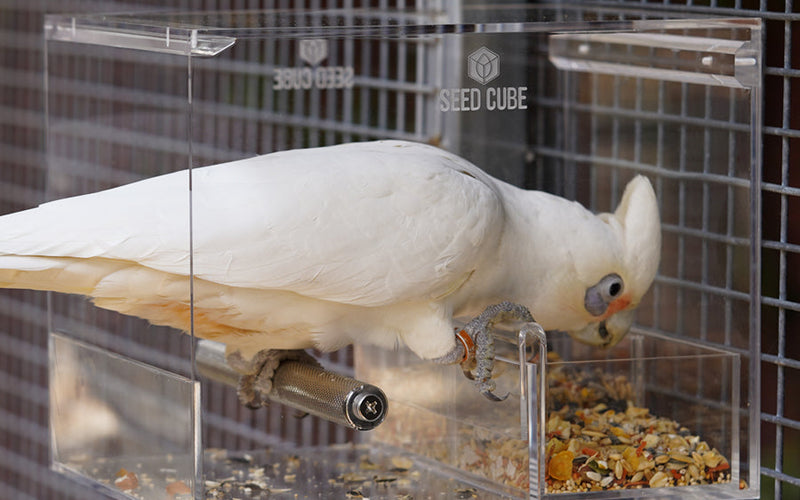
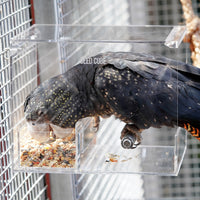
A large cockatoo feeding from a Seed Cube, which turns a pellet diet into foraging.

The short answer: what to feed a cockatoo

A healthy cockatoo diet is built on formulated pellets, with fresh vegetables and greens every day and a smaller layer of quality seed. Pellets should make up roughly 75 to 80% of what your bird eats, vegetables and a little fruit most of the rest, and seed a modest top-up rather than the meal. Fresh water goes down daily.

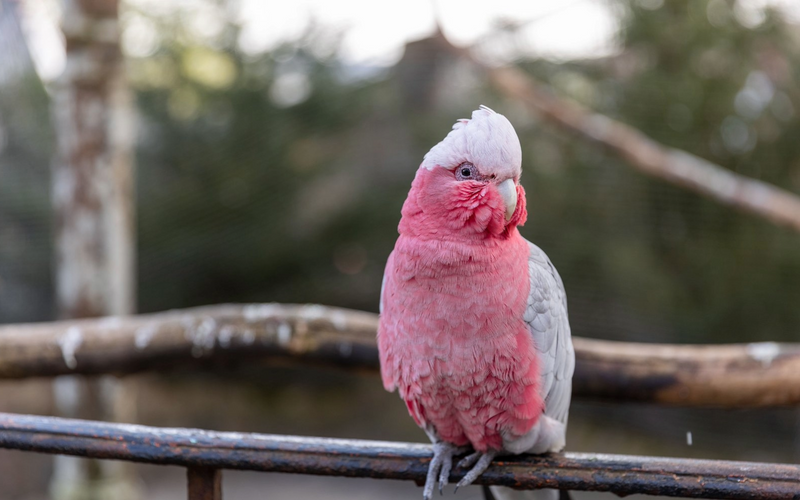
"Cockatoo" covers a lot of birds, from the small cockatiel to the large sulphur-crested cockatoo, galah and corella. The diet principles here apply across the group, and portion sizes and pellet size scale with the bird. Galahs and corellas have their own guides, since both are especially prone to weight gain.

How you feed matters as much as what

Cockatoos are among the most intelligent parrots kept as pets, and they live a very long time, commonly 40 to 70 years and sometimes more. A bird that clever and that long-lived needs to work for its food. In the wild it spends hours foraging. At home, a heaped bowl of seed left out all day is the opposite, and boredom is a leading cause of the screaming and feather-plucking cockatoos are known for.

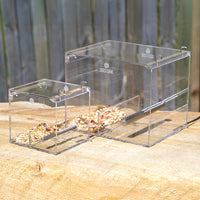
So spread food out, hide it, and make your bird forage. A foraging feeder like the Seed Cube puts the food behind a clear panel your cockatoo has to reach into, which slows eating, keeps the mind busy and contains the mess. Feed a good diet through foraging and you fix nutrition and behaviour at the same time.

Why an all-seed diet is the classic trap

The most common cockatoo diet mistake is a bowl of seed, usually heavy on sunflower and peanuts. Birds pick out those fatty favourites and leave the rest, so the diet ends up high in fat and short on calcium, vitamin A and other nutrients. Over a long cockatoo life that leads to obesity, fatty liver disease, high cholesterol and hardened arteries (atherosclerosis).

It also drives fatty tumours. Lipomas, soft fatty lumps under the skin, are most common in overweight birds on high-fat seed diets, and sulphur-crested cockatoos and galahs are among the species most prone to them. The good news: caught early, many respond to a switch to a lower-fat, balanced diet.

Pellets: the foundation of the diet

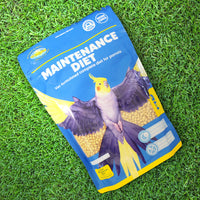
Formulated pellets are the base of a good cockatoo diet because each pellet carries balanced nutrition, so your bird cannot pick out the fatty bits. Aim for pellets to be about 75 to 80% of daily food. Choose a pellet made for larger parrots or cockatoos, such as Vetafarm or Lafeber ranges, and match the pellet size to your bird.

If your cockatoo is on seed now, do not switch overnight. Mix pellets in with the seed and lift the ratio slowly over weeks. Offer pellets first thing in the morning when your bird is hungriest, and weigh your bird through the change. If it loses more than about 10% of its body weight, slow down and talk to your vet.

Vegetables, greens, vitamin A and calcium

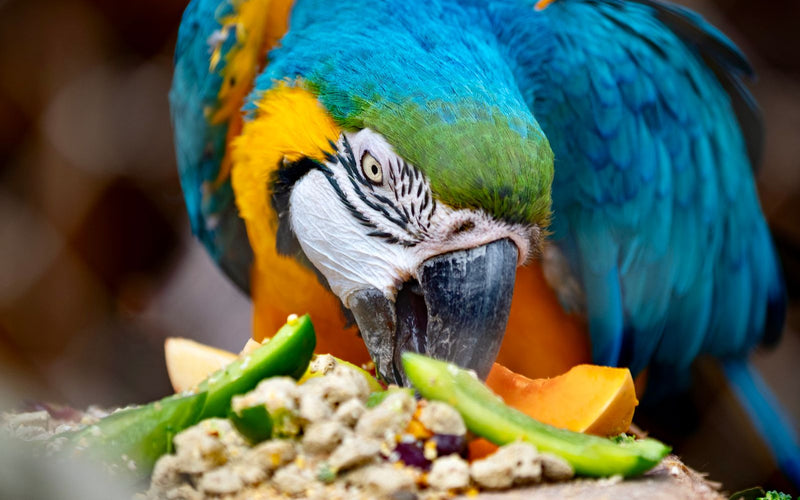
Fresh vegetables and leafy greens do the job seed cannot, and they target the two things seed diets lack most: vitamin A and calcium. For vitamin A, offer dark leafy greens, carrot, capsicum and sweet potato. For calcium, kale, broccoli and bok choy help, along with a cuttlebone in the cage.

Skip pale, watery vegetables like iceberg lettuce and celery, which add little. Wash everything well and cut it to a size your bird can handle. Offer vegetables in a separate dish and clear them after a couple of hours so they do not spoil, especially in warm weather.

Seed and treats: the smaller layer

Seed is not banned. Cockatoos enjoy it, and a quality seed mix has a place as the smaller layer of a balanced diet, roughly the part left after pellets and vegetables. The key is choosing a better blend and keeping the portion modest. A mix made for the larger cockatoos, like the Forage Gourmet Galah, Corella and Cockatoo blend, avoids loading up on sunflower.

Treat sunflower seeds, peanuts and nuts as occasional rewards, not the daily fill. They are useful for training or foraging games in small amounts, but they are exactly the high-fat foods that cause the trouble when they become the meal.

Foods that are toxic or off-limits

Some foods are dangerous and should never reach your cockatoo. Avocado and onion are toxic to birds. Chocolate, anything with caffeine (coffee, tea, cola) and alcohol are all off-limits. So are salty, sugary and heavily processed human snacks like chips, biscuits and lollies.

Go easy on fruit generally, since it is high in sugar, and remove apple seeds and stone-fruit pits. Dairy is not toxic but birds do not digest it well, so keep it to tiny amounts if at all. When in doubt, leave it out.

Switching your cockatoo to a better diet

Change the diet gradually. A sudden switch can leave a stubborn cockatoo refusing to eat, which is dangerous. Introduce pellets alongside the current seed, lift the pellet share week by week, and hold back sunflower and peanuts. Use morning hunger to your advantage, and try grinding pellets over a favourite moist food if your bird ignores them at first.

Weigh your bird through the change and watch its droppings and energy. If it drops more than about 10% of its weight, or you are dealing with an overweight bird or one with lumps, get an avian vet involved before you go further. For the full picture on housing, health and behaviour, see our Cockatoo Care Guide.

Key facts

  • 75 to 80%

    of a cockatoo's diet should be formulated pellets

  • 40 to 70+ yrs

    how long a well-fed cockatoo can live

  • 20 to 40%

    daily vegetables, greens and limited fruit

  • Vitamin A + calcium

    the two nutrients an all-seed diet lacks most

Seed layerForage Gourmet Seed - Galah, Corella & Cockatoo Specialty Blend-Bird Seed-Seed Cube

Make the smaller seed layer count

Forage Gourmet Seed - Galah, Corella & Cockatoo Specialty Blend

$15.99

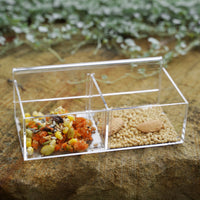
Cockatoos still enjoy seed, so make the seed layer count. The Forage Gourmet Galah, Corella and Cockatoo blend is built for the larger cockatoos, with less filler and no sunflower-heavy fatty mix. Use it as the smaller part of a pellet-based diet, ideally in a Seed Cube so your bird forages for it.

Shop the blend
Forage Gourmet Seed - Galah, Corella & Cockatoo Specialty Blend-Bird Seed-Seed Cube
Forage Gourmet Seed - Galah, Corella & Cockatoo Specialty Blend $15.99
Shop the blend

Frequently asked questions

What do cockatoos eat?

A pet cockatoo should eat a formulated pellet diet as the base, around 75 to 80% of daily food, plus fresh vegetables and leafy greens each day and a smaller layer of quality seed, with fruit in small amounts. Wild cockatoos eat seeds, nuts, fruit, roots and some insects, but a home diet needs pellets to stay balanced.

Can cockatoos eat sunflower seeds?

In small amounts, as an occasional treat. Sunflower seeds are high in fat and low in calcium and vitamin A, and cockatoos love them enough to eat little else. Use them for training or foraging games, not as the daily diet.

What vegetables can cockatoos eat?

Good choices include dark leafy greens, carrot, capsicum, sweet potato, broccoli, kale and bok choy. These supply the vitamin A and calcium that seed diets lack. Avoid watery, low-value vegetables like iceberg lettuce and celery, and never feed onion or avocado.

What foods are toxic to cockatoos?

Never feed avocado, onion, chocolate, caffeine (coffee, tea, cola) or alcohol. Also avoid salty, sugary and processed human snacks, and remove apple seeds and stone-fruit pits. If you are unsure about a food, leave it out and check with an avian vet.

Do cockatoos need pellets?

Pellets are the healthiest base for a pet cockatoo because each pellet is nutritionally balanced, so your bird cannot pick out only the fatty seeds. Vets generally recommend pellets make up about 75 to 80% of the diet, alongside fresh vegetables and a smaller seed layer.

Can cockatoos eat fruit?

Yes, in small amounts. Fruit is high in water and natural sugar, so treat it as a garnish rather than a staple. Berries, apple (no seeds), pear and melon are fine occasionally. Offer it in a separate dish and remove it after a couple of hours.

How do I stop my cockatoo eating only seed?

Switch slowly. Mix pellets into the seed and increase the pellet share over weeks, offer pellets first thing in the morning, and hold back sunflower and peanuts. A foraging feeder helps, because your bird has to work for the food instead of grazing a full bowl. Weigh your bird through the change and see a vet if it loses more than about 10% of its weight.

What can I feed a wild cockatoo?

It is best not to feed wild cockatoos. Bread and seed mixes harm their health and encourage large, aggressive flocks that damage property. If you want to help wild birds, offer fresh water and native plants instead of food. This guide is about feeding pet cockatoos in your care.

Sources

  1. VCA Animal Hospitals, Cockatoos - FeedingPellets 75 to 80% of the diet; vitamin A, calcium and atherosclerosis risks; toxic foods.
  2. Lafeber Company, avian nutrition and seed-to-pellet conversionWhy seed-only diets fall short and how to transition a bird onto pellets safely.
  3. The Unusual Pet Vets, Lipomas in pet birdsObesity and high-fat seed diets drive fatty tumours in cockatoos and galahs.
  4. RSPCA Australia Knowledgebase, companion bird diet and welfareBalanced diet, enrichment and welfare guidance for pet parrots.

About the author

Russell Neale
Founder, Seed Cube

Russell Neale is the founder of Seed Cube, a bird-feeding brand he started in 2024 in the Hills District of NSW. A long-time bird owner himself, with three birds including a 12-year-old hand-raised Alexandrine, Russell built Seed Cube after years of frustration with messy, flimsy and poorly designed feeders.

Seed Cube makes practical, durable products that keep feeding cleaner, easier and safer for pet birds, and that are designed to last rather than end up in landfill. The brand works closely with Hills Wildlife Sanctuary, and everything it makes is BUILT FOR BIRDS™.

Get the cockatoo diet right and you set your bird up for a long, healthy life. Lead with pellets, add vegetables daily, keep seed as a smaller layer, and make your cockatoo work for its food. See our Cockatoo Care Guide for housing, health and behaviour, and the Cockatoo Feeder to run the diet with less mess. If your bird is overweight or you are changing its diet, check in with an avian vet first.

Shop the Cockatoo Feeder