
Feeding and Diet

What to Feed a Galah: A Complete Diet Guide

By Russell Neale, Founder, Seed Cube 4 min read

TL;DR

  • Build the diet on formulated pellets, not seed
  • Offer fresh vegetables and greens every day
  • Keep sunflower seed to a few pieces as a treat
  • Galahs are very prone to obesity and fatty tumours

Quick answer

Feed a galah a diet built on formulated pellets, with fresh vegetables and greens every day and only a small amount of quality seed. Keep sunflower seed and other oily foods to a minimum, because galahs are very prone to obesity and fatty tumours. Offer fruit as an occasional treat, and always provide fresh water.

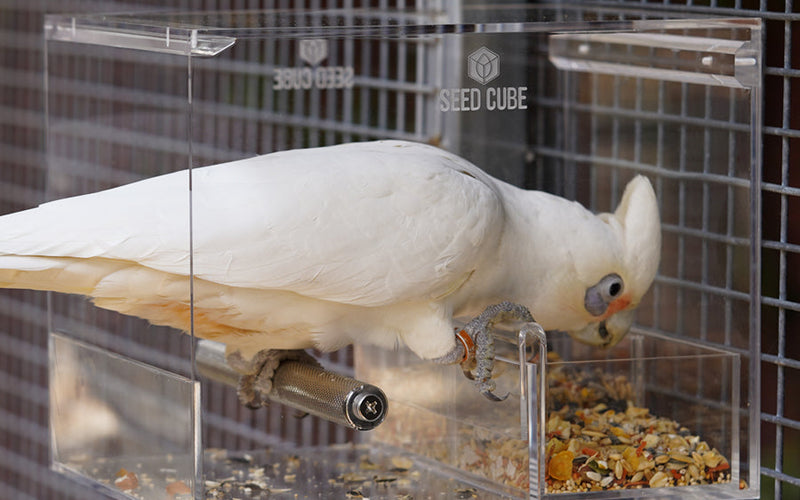
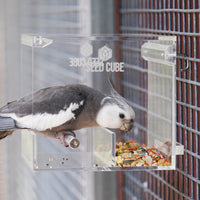
Galah eating seed in a Seed Cube no-mess feeder
A galah's health depends on a low-fat, pellet-based diet.

What to feed a galah: the short answer

A healthy galah diet is built on formulated pellets, with fresh vegetables every day and only a small amount of quality seed. Pellets should make up roughly half to two thirds of what your galah eats. Add a daily serve of vegetables and leafy greens, keep seed as a minor part of the mix, and offer fruit only as an occasional treat.

The single most important rule is to keep fat low. Galahs are one of the parrots most prone to obesity, so go easy on sunflower seed, nuts and oily treats.

Why galahs need a low-fat diet

Galahs gain weight easily, and a fatty diet is the main reason pet galahs get sick. A seed-only or sunflower-heavy diet is high in fat and low in vitamins, which can lead to obesity, fatty liver disease and fatty tumours under the skin, called lipomas. Avian vets list galahs among the species that most often develop these lumps.

The fix is simple: cut the fat. Make pellets and vegetables the base of the diet, keep sunflower seed to a few pieces used as a training reward, and weigh your galah regularly so you catch weight gain early.

The daily galah plate

Offer a fresh plate each morning. A good daily structure looks like this:

  • Pellets: about half to two thirds of the diet, available through the day.
  • Vegetables and greens: a generous daily serve of fresh veg and leafy greens.
  • Seed: a small measured amount of a quality galah blend, not a full bowl.
  • Fruit: a small piece a few times a week, treated like dessert.
  • Water: clean, fresh water changed daily.

Remove uneaten fresh food after a few hours so it does not spoil.

Best vegetables and greens for galahs

Vegetables should be the workhorse of a galah's fresh food. Good daily choices include broccoli, carrot and carrot tops, sweet potato, pumpkin, green beans, zucchini, peas, corn and leafy greens like silverbeet, endive and dandelion. Seeding grasses and grass heads are a natural favourite and great for foraging.

Serve vegetables raw or lightly steamed, chopped to a manageable size. Variety matters, so rotate what you offer through the week to cover a broad range of nutrients.

Seed and pellets: getting the balance right

Pellets take the guesswork out of nutrition because each piece is balanced, so a galah cannot pick out only the fatty bits. A quality Australian pellet such as Vetafarm Nutriblend makes a solid base. Introduce pellets gradually if your galah is new to them.

Seed still has a place as part of a foraging mix and for enrichment, as long as the portion is small and the blend is right. A species-matched blend is better than a generic parrot mix that leans heavily on sunflower.

Fruit, treats and foraging

Fruit is fine in small amounts, but it is high in sugar, so treat it like dessert. A little apple, pear, berries or melon a couple of times a week is plenty, and always remove apple seeds.

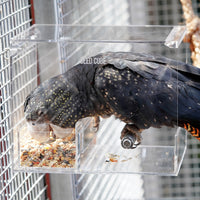
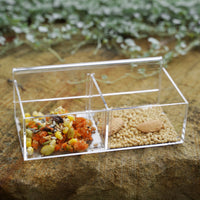
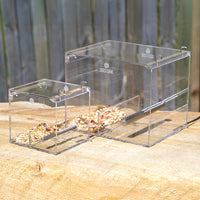
Sprouted seed is a healthier alternative to dry seed and a good source of protein and vitamins. For enrichment, hide food in foraging toys and offer safe native browse such as eucalyptus, bottlebrush or grevillea. Feeding through a no-mess feeder like the Seed Cube encourages foraging and keeps scattered seed off the cage floor, which also makes it easier to see how much your galah is really eating.

Foods to avoid

Some foods are harmful and should never be offered to a galah:

  • Avocado and chocolate are toxic to birds.
  • Caffeine and alcohol can be fatal.
  • Onion, garlic and very salty or sugary foods.
  • Apple seeds and fruit pips.
  • Dairy, which birds do not digest well.

Iceberg lettuce is not toxic but is mostly water with little nutrition, so choose darker leafy greens instead.

How to switch a seed-only galah to a balanced diet

Move slowly. A galah used to seed will not change overnight, and a bird that stops eating can get very sick within a day or two. Start by mixing a small amount of pellets into the seed and slowly shift the ratio over a few weeks. Offer vegetables at the same time each day when your galah is hungriest, and try different presentations, such as chopped, whole, or clipped to the cage bars.

Weigh your galah weekly during the change to make sure it keeps eating. If it refuses new food or loses weight, slow down and speak with an avian vet.

Key facts

  • 270 to 350 g

    Healthy adult galah weight

  • 50 to 60%

    Of the diet should be formulated pellets

  • A few seeds

    Daily sunflower limit, as a treat

  • 40+ years

    Galah lifespan on a good diet

Vet-informed pickForage Gourmet Seed - Galah, Corella & Cockatoo Specialty Blend-Bird Seed-Seed Cube

Forage Gourmet

Forage Gourmet Seed - Galah, Corella & Cockatoo Specialty Blend

$15.99

The Galah, Corella and Cockatoo blend is formulated for larger cockatoos and balanced to sit alongside pellets and fresh veg, not replace them. Pair it with a quality pellet and serve it in the Large Seed Cube to cut mess and slow scatter-feeding.

Shop the Galah blend
Forage Gourmet Seed - Galah, Corella & Cockatoo Specialty Blend-Bird Seed-Seed Cube
Forage Gourmet Seed - Galah, Corella & Cockatoo Specialty Blend $15.99
Shop the Galah blend

Frequently asked questions

What do galahs eat?

In captivity, galahs do best on formulated pellets as the base, a daily serve of fresh vegetables and greens, and a small amount of quality seed. Fruit is an occasional treat. In the wild they mostly eat seeds gathered from the ground, along with grasses, roots and some greens.

Can galahs eat sunflower seeds?

Only in tiny amounts. Sunflower is high in fat and galahs are very prone to obesity, so use a few seeds as a training reward rather than a daily food.

How much should I feed my galah?

Offer a fresh plate each day of pellets and chopped vegetables, plus a small measured amount of seed. Watch your galah's weight rather than the bowl, and adjust portions so it stays lean. A healthy adult weighs about 270 to 350 g.

Can galahs eat fruit?

Yes, in small amounts. Fruit is high in sugar, so a little apple, pear, berries or melon a couple of times a week is enough. Always remove apple seeds.

What foods are toxic to galahs?

Never feed avocado, chocolate, caffeine, alcohol, onion, garlic, or very salty or sugary foods. Apple seeds and fruit pips should also be removed. When in doubt, leave it out and check with an avian vet.

Do galahs need pellets?

Pellets are strongly recommended as the base of the diet because they are nutritionally balanced and stop a galah picking out only the fatty seeds. If your bird is on seed only, transition to pellets slowly over several weeks.

Can galahs eat bread?

Bread is not toxic but offers little nutrition and can contain salt and sugar, so it is not a good regular food. Choose vegetables and pellets instead.

How do I get my galah to eat vegetables?

Offer vegetables when your galah is hungriest, usually first thing in the morning, and try different presentations such as chopped, grated, whole, or clipped to the cage bars. Eating alongside your bird and staying consistent day to day helps fussy galahs come around.

Sources

  1. Unusual Pet Vets, Cockatoos, Galahs and Corellas care informationDiet, obesity and lipoma guidance for cockatoos
  2. LafeberVet, Nutritional Management of Obesity in BirdsWeight management and low-fat feeding in parrots
  3. RSPCA Australia KnowledgebaseCompanion bird care and welfare

About the author

Russell Neale
Founder, Seed Cube

Russell Neale is the founder of Seed Cube, a bird-feeding brand he started in 2024 in the Hills District of NSW. A long-time bird owner himself, with three birds including a 12-year-old hand-raised Alexandrine, Russell built Seed Cube after years of frustration with messy, flimsy and poorly designed feeders.

Seed Cube makes practical, durable products that keep feeding cleaner, easier and safer for pet birds, and that are designed to last rather than end up in landfill. The brand works closely with Hills Wildlife Sanctuary, and everything it makes is BUILT FOR BIRDS™.

A galah's long life depends on getting fat under control. Make pellets and vegetables the base, keep seed small and sunflower rare, and weigh your bird so you catch weight gain early. Feed it cleanly in a no-mess Seed Cube, and check in with an avian vet if you are switching diets or spot a lump.

See the Galah Seed Cube feeder