






Eclectus Care and Feeding
Everything for a cleaner, healthier eclectus setup, in one place.

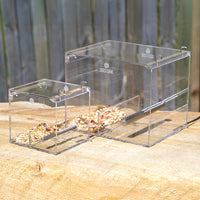
Which size suits an eclectus?
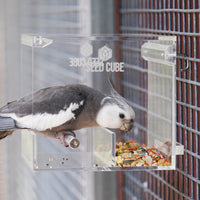
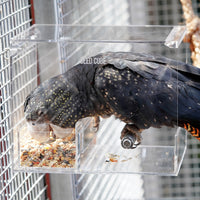
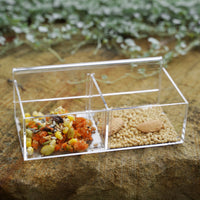
See how the Small and Large Seed Cube match each bird and cage.
Check the size guide

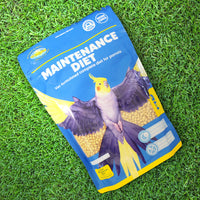
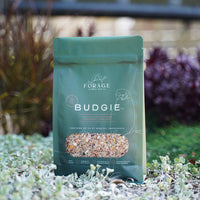
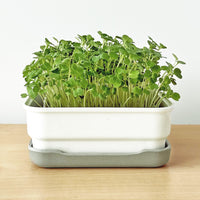
What to feed an eclectus
The complete eclectus diet guide: fresh foods, the right low-iron pellet, and what to avoid.
Read the diet guide
Male vs Female Eclectus
Tell the sexes apart at a glance, why they look so different, and which suits you.
Read the guide
Toe-Tapping & Wing-Flipping
Why eclectus toe-tap and wing-flip, what it means, and the diet fix.
Read the guide
Behavioral Profile
Mess Potential
High
Low
High
Vocalization Level
Moderate
Quiet
Loud
Species Specifications
Size
33 to 40 cm long
Weight
375 to 550 g
Feather Type
Soft, hair-like plumage
Lifespan
30 to 50 years
Temperament
Calm, intelligent, observant and food-motivated
Origins
New Guinea, nearby islands and far north Queensland
Suitable Foods
Mostly fresh vegetables, fruit and legumes, a low-iron eclectus pellet, and only a little seed as a treat
Care Level
Advanced
Care Notes
Common Feeding Mistakes
The big eclectus mistakes are a seed-heavy diet, a generic high-iron pellet, and heavy synthetic supplements. Eclectus absorb nutrients very efficiently and are prone to iron storage disease, so use a low-iron pellet made for eclectus, build the diet on fresh vegetables, fruit and legumes, lean on red and orange veg for vitamin A, and avoid artificial colours and over-supplementation.
Habitat Requirements
Eclectus need a large cage or aviary with room to move and a calm, low-stress setting. Provide sturdy perches of varying diameter, foraging and chew enrichment, and daily out-of-cage time. They are observant birds that unsettle easily, so keep the cage away from chaos and harsh afternoon sun.
Handling & Socialisation
Eclectus bond closely but can be reserved and slow to trust, so keep handling gentle, calm and consistent. Females can turn territorial and hormonal, especially around a nest site, so read body language and set steady boundaries. Regular positive interaction keeps them confident and prevents plucking and screaming.