
TL;DR
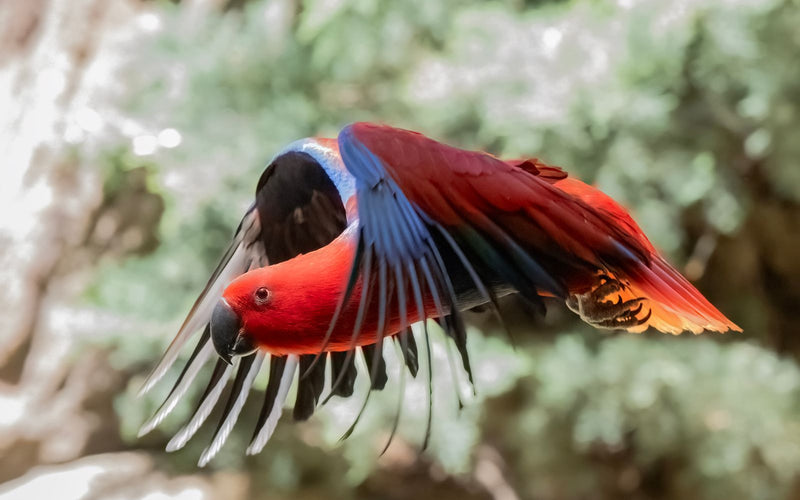
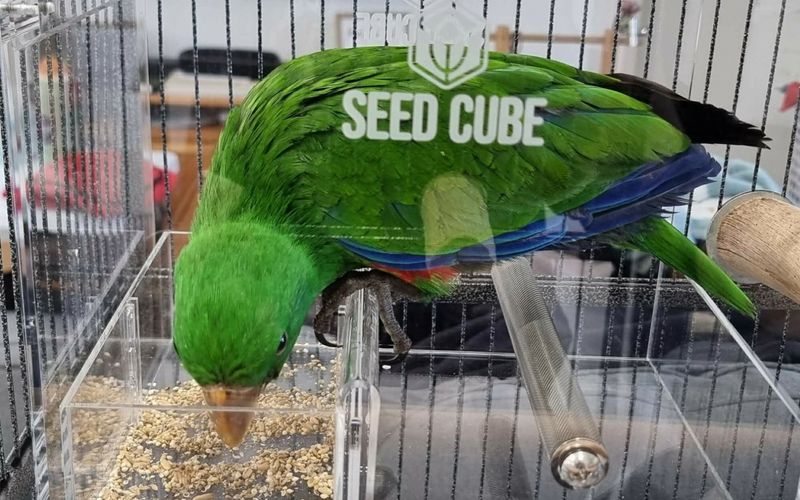
- Males are emerald green with a yellow-to-red beak; females are red and blue with a black beak.
- Beak colour is the fastest way to sex an adult eclectus.
- The striking difference evolved around competition for scarce nest hollows.
- Both sexes suit the same low-iron, fresh-food diet and the same Large Seed Cube.
Quick answer
The male: emerald green with a candy-corn beak
The female: red and blue with a jet-black beak
The fastest way to tell them apart
Why the sexes look nothing alike
Subspecies change the shade
Do males and females behave differently?
Which eclectus is right for you?
Key facts
-
Most sexually dimorphic parrot
Dimorphism
-
Yellow, orange and red
Male beak
-
Jet black
Female beak
-
Female around 18 months, male 3 to 4 years
Sexual maturity
Cleaner fresh feeding
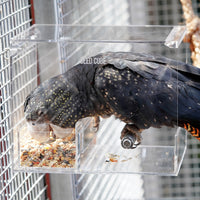
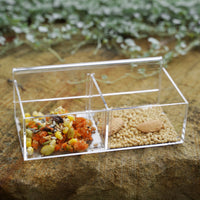
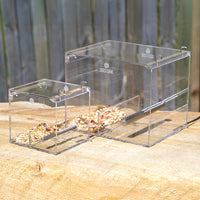
Seed Cube - Large - No mess bird feeder
$129.99
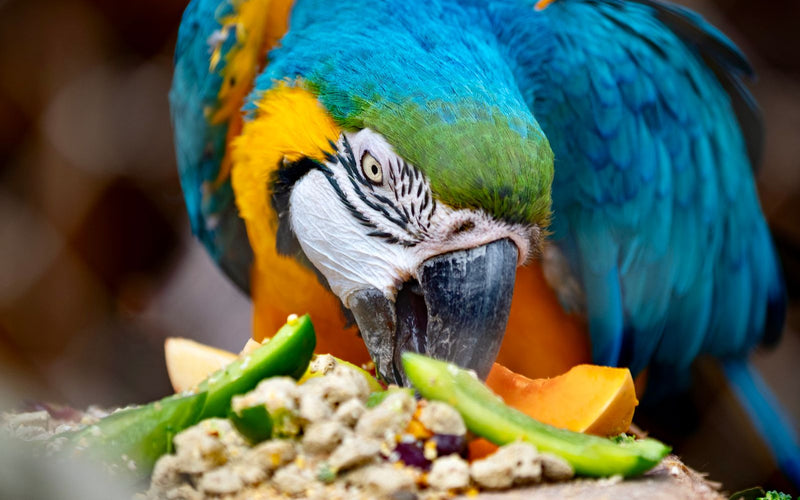
Male or female, an eclectus eats a lot of wet, chopped fresh food. The Large Seed Cube keeps veg, fruit and pellets contained inside the cage instead of across the floor.
Shop the Large Seed CubeFrequently asked questions
How can you tell a male from a female eclectus?
Look at the beak and body colour. Adult males are emerald green with a yellow-to-orange beak. Adult females are red and blue with a jet-black beak. Beak colour is the quickest and most reliable tell on a mature bird.
Are male or female eclectus better pets?
Neither is objectively better. Males tend to be more outgoing and a little easier to tame, while females are often more confident and territorial, especially when hormonal. Temperament varies more between individuals than between the sexes.
At what age can you sex an eclectus?
Adult colours make sexing easy once the bird is in mature feather. Chicks and young juveniles are hard to sex by eye, so breeders often use a DNA test to confirm sex before the plumage develops.
Why is the female eclectus red and the male green?
It comes down to nesting. Females guard scarce nest hollows, and their red plumage advertises an occupied hollow while hiding them in the dark cavity. Males stay green to camouflage in the canopy while foraging widely for the flock.
Do female eclectus talk as well as males?
Yes. Both sexes are capable talkers and can build a good vocabulary with daily interaction. Talking ability depends far more on the individual bird and the time you spend with it than on its sex.
Are female eclectus more aggressive?
Females can be more territorial and assertive, particularly during hormonal periods and around a nest site. With calm handling, a steady routine and no beak or back stroking, most females stay confident rather than aggressive.
Which eclectus subspecies is most common as a pet?
The Solomon Island eclectus is the smallest subspecies and the one most commonly kept in captivity. Larger subspecies like the Grand and Vosmaeri are also kept, with the Vosmaeri female showing a distinctive yellow tail band.
Do male and female eclectus need different diets?
No. Both sexes need the same eclectus diet: mostly fresh vegetables, fruit and legumes, a low-iron pellet, and only a little seed as a treat. Eclectus absorb nutrients efficiently, so avoid synthetic supplements for either sex.
Sources
- Eclectus, Wikipedia (taxonomy and sexual dimorphism)Background on the eclectus genus, its extreme sexual dimorphism, and why the sexes were once classed as separate species.
- Eclectus care profile, Lafeber CompanyAvian care reference covering eclectus temperament, subspecies and husbandry.
- Male vs female eclectus, PangoVet (veterinary-reviewed)Veterinary-reviewed comparison of the physical and behavioural differences between the sexes.
- The evolution and behaviour of the eclectus parrot, Parrots InternationalField research on nest-hollow competition and the mating system behind the colour difference.
Once you know the beak-colour trick, telling a male eclectus from a female takes a second. The deeper story, of green males hidden in the canopy and red females guarding rare nest hollows, is one of the most remarkable in the parrot world. Whichever sex you keep, the care is the same: a fresh, low-iron diet, a calm home, and a feeder that keeps all that chopped food contained.