

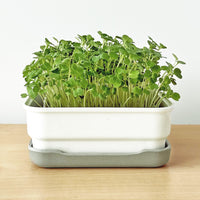
Grow Fresh Red Cabbage Microgreens at Home
Vibrant red cabbage microgreens packed with antioxidants
All orders ship within 24 business hours of being placed.
Australia
- QLD, NSW, VIC: 1–6 business days
- TAS, SA, WA, NT: 3–14 business days
- 0–7.6kg: flat rate $11.99
- 7.7–20kg: flat rate $16.00
- Free shipping on orders over $240
- Delivered with Australia Post
Express (Australia)
- Generally arrives in 1–3 business days
- Rates calculated at checkout based on your location
- Delivered with Australia Post
New Zealand
Two delivery options available at checkout.
| Weight | Standard6–12 days | Express3–7 days |
|---|---|---|
| 0–0.5kg | $10.95 | $16.95 |
| 0.51–1kg | $12.95 | $18.95 |
| 1.01–1.5kg | $14.95 | $21.95 |
| 1.51–2kg | $16.95 | $22.95 |
| 2.01–3kg | $17.95 | $24.95 |
| 3.01–5kg | $27.95 | $34.95 |
| 5.01–10kg | $66.82 | $71.77 |
| 10.01–20kg | $132.94 | $136.79 |
United States All duties included
All duties & tariffs prepaid for a smooth delivery. Choose Standard or Express at checkout.
| Weight | Standard10–20 days | Express3–7 days |
|---|---|---|
| 0–0.5kg | $14.95 | $34.95 |
| 0.51–1kg | $22.95 | $39.95 |
| 1.01–1.5kg | $28.95 | $52.95 |
| 1.51–2kg | $37.95 | $57.95 |
| 2.01–3kg | $41.95 | $59.95 |
| 3.01–5kg | $67.95 | $84.95 |
| 5.01–10kg | $129.95 | $137.95 |
| 10.01–15kg | $174.95 | $189.95 |
| 15.01–20kg | $219.95 | $234.95 |
| 20.01–30kg | $349.95 | $374.95 |
All rates in AUD. Shipping to other countries available. Rates and delivery times calculated at checkout based on your location and order weight.
- All parrot species (cockatiels, budgies, conures, ringnecks, galahs, cockatoos, macaws, African greys)
- Suitable for pet birds and breeders
- Ideal for bird owners wanting color variety and antioxidant boost
- Perfect for birds ready to move beyond pale greens into visually appealing options
- Dual-use: humans and birds (gourmet garnishes for salads and dishes)
- 6x compostable jute grow mats (100% plant-based fibre, fully compostable)
- 6x Red Cabbage seed packets (untreated, non-GMO, approximately 1,000 seeds per packet)
- No additional soil or chemicals needed
- Everything needed for six complete growing cycles
- Sow: Spread seeds evenly across moistened jute mat, cover lightly with another mat
- Water: Mist daily with water bottle or spray; keep mat moist but not waterlogged
- Light: Place on windowsill or under grow light; 12-16 hours daily ideal
- Temperature: Optimal 18-24°C; below 12°C growth stalls, above 25°C seeds may cook
- Harvest: 8-12 days depending on temperature and light; ready when purple-veined leaves appear
- Cut just above mat surface with scissors or Micropod Micro Snips
- For birds: Offer 1-2 tsp for small birds, 1-2 Tbsp for medium parrots, 2-4 Tbsp for large parrots
- Red cabbage is a brassica with mild, sweet flavor. Offer a few times per week
- Rotate with non-brassicas (pea, sunflower, wheatgrass) throughout the week for balanced nutrition
- Store harvested microgreens dry and unwashed in vented containers with paper towel
- Rinse just before serving; remove leftovers after 2 hours
Will red cabbage tint my bird's droppings?
Yes, temporarily. Red cabbage contains anthocyanins (purple pigments) that pass through the digestive system intact. Droppings may turn purplish while your bird is eating red cabbage. This is completely harmless and normal. It stops once you stop feeding red cabbage for a few days. It's not a health concern.
Is red cabbage safe for all bird sizes?
Yes. Red cabbage is a mild brassica suitable for budgies, cockatiels, small conures, and all larger parrots. The sweet, earthy flavor is gentle and widely accepted. No advanced portion control needed like with mustard varieties.
What antioxidants does red cabbage provide?
Red cabbage is high in anthocyanins (the purple pigments) which are powerful antioxidants. These support immune function and provide natural anti-inflammatory benefits. For birds, this means better overall health, stronger immune response, and support for feather condition. It's concentrated nutrition in small amounts.
How does red cabbage compare to pak choi and mizuna?
Pak choi is the mildest and freshest. Mizuna has gentle peppery heat. Red cabbage is mildly sweet and earthy with the bonus of high antioxidants and visual appeal. All three are brassicas safe for regular rotation. Choose based on what flavor profile your bird prefers and what variety you want in their weekly menu.
Can I mix red cabbage with other microgreens?
Yes. Red cabbage mixes well with pak choi, mizuna, or pea shoots. You could offer a blend for flavor and color variety, or alternate them through the week. The key is rotating with non-brassicas to maintain balanced nutrition.
How often should I offer red cabbage?
A few times per week as part of brassica rotation. Red cabbage is mild and sweet, so it's generally well-accepted. But still rotate with non-brassicas (pea, sunflower, wheatgrass, carrot, cucumber) throughout the week. Always ensure base diet includes quality pellets with iodine.
What makes red cabbage good for human cooking?
Red cabbage microgreens are vibrant, mild, and slightly sweet. They're perfect as gourmet garnishes on salads, bowls, and dishes where color and subtle flavor matter. The tender purple-veined leaves add visual appeal and concentrated nutrition to family meals.
Is the color natural or dyed?
The color is completely natural. Red cabbage naturally produces anthocyanins, which create the purple pigments. No dyes, no processing. What you see is what you get, straight from the seed.
How do I know red cabbage is ready to harvest?
Harvest when purple-veined leaves are fully formed and tender, typically 8-12 days. The microgreens should have vibrant purple coloring and delicate texture. Don't wait for them to grow tall; young microgreens have better flavour and nutrition. A quick snip with scissors or Micro Snips just above the mat does the job.


