Bird Health

Alexandrine Moulting: What's Normal, How to Help and When to Worry

By Russell Neale, Founder, Seed Cube 15 min read

TL;DR

  • One main moult season a year, usually after breeding. Indoor birds under lamps can moult less predictably.
  • A normal moult is gradual and even on both sides. Bare skin is never part of it.
  • Head pin feathers are the ones your bird can't reach. Help only once the sheath is dry and flaky.
  • Check dropped feathers: a clear, hollow quill had finished growing. Colour inside the quill means a blood feather.
  • A broken blood feather can bleed fast. Use styptic powder, cornflour or flour, and call a vet if it hasn't stopped in 2 to 3 minutes.
  • Moult support starts with diet: protein, the amino acids feathers are built from, and calcium. Add supplements on vet advice, never in the water.
  • Alexandrines aren't unusual. Rosellas and galahs moult the same way, while budgies moult all year round.

Quick answer

Alexandrines do most of their feather replacement in one main moult season a year, usually after breeding. Expect dropped feathers, spiky pin feathers on the head and a scruffy, quieter bird for anywhere from a month to several months. That is normal as long as the loss is gradual, even on both sides and never shows bare skin. Help by offering baths, gently easing dry pin feather sheaths on the head, and keeping the diet strong. Bare patches, bleeding that won't stop, or new feathers that grow in twisted or discoloured need an avian vet.
Adult male Alexandrine parrot in profile during his yearly moult
An adult male Alexandrine partway through his yearly moult. Replacing a full set of feathers takes weeks to months.

The short answer

An Alexandrine has one main moult season a year, and it is usually a big one. Over a month to several months, typically after breeding, it drops and regrows much of its plumage. Pin feathers crowd the head, long tail and wing feathers turn up on the cage floor, and the bird can look scruffy and act a little flat.

Here is the part most moulting advice misses. An Alexandrine is not doing a different kind of moult from other parrots. It does what many seasonal breeders do and packs the moult into one stretch of the year. At up to 62 cm long it is also one of the largest parakeets, according to Agriculture Victoria. Big feathers dropping in a short window are simply easier to see.

What a normal Alexandrine moult looks like

A healthy moult is gradual. VCA's avian vets describe it as bilateral and symmetrical: feathers drop in matching pairs on each side, so the bird is never left bald or unable to fly. The Association of Avian Veterinarians puts it plainly. Feathers are replaced about once a year, a few at a time, and never to the point where patches of bare skin show.

What you will notice:

  • More feathers on the cage floor than usual. When the big wing and tail feathers go, the AAV notes it can look like far more is being lost than really is.
  • Pin feathers: short, pale spikes, thickest on the head and neck.
  • More preening and scratching as new feathers break out of their sheaths.
  • A quieter bird. VCA notes a heavy moult is taxing, and some birds become less active or more subdued.

One thing you should not see is a whole wing or a whole tail gone at once. Lafeber advises that parrots don't naturally drop all their wing or tail feathers together. A single long tail feather on the floor is normal. A bare tail is a reason to look closer.

Adult male Alexandrine parrot with uneven chest and wing feathers partway through a moult
Uneven chest and wing feathers partway through a moult. The plumage looks rough, but no skin shows.

What a feather is made of

Every feather on the cage floor is made of keratin, a protein. The US Fish and Wildlife Service Feather Atlas and the Cornell Lab of Ornithology describe the same basic build:

  • Calamus, or quill. The hollow base of the shaft, with no barbs. It sits in the follicle in the skin.
  • Rachis. The stiff central shaft that runs up the feather.
  • Barbs. The rows of fine branches off each side of the shaft. Together they form the flat vane.
  • Barbules. Smaller branches off each barb, with tiny hooks that lock onto the barbules of the next barb.

That locked surface is what lets a wing or tail feather shed water and support flight. Cornell notes that when birds preen, they guide the barbules back into place and spread oil through the feathers to keep them flexible and waterproof.

That is why a moulting Alexandrine preens so much. It is opening new feathers and keeping the old ones in working order at the same time.

Close-up of two moulted Alexandrine feathers showing the central shaft and rows of barbs
Two moulted Alexandrine feathers up close. Each barb branches off the central shaft, and tiny hooks hold neighbouring barbs together.

Is a heavy yearly moult unique to Alexandrines?

No. Parrots fall into a few broad moult patterns, and knowing which one your bird follows tells you what normal looks like.

One main moult after breeding

  • Alexandrine and Indian ringneck. A University of Oxford study of wild rose-ringed parakeets in Britain, the Alexandrine's smaller relative in the same genus, caught birds in wing moult between May and July, after breeding. The European reference it cites goes further: the main wing moult can take more than a year, pausing at the end of one season and picking up again in the next. That is why a ringneck or Alexandrine can still look a little uneven in the wing after its moult season ends.
  • Eastern rosella. A study in the CSIRO journal Emu found adults have a single post-breeding moult each year, from December to May.
  • Galah. Ian Rowley's study in the West Australian wheatbelt found adults moulting from November to April, with the main wing moult taking about 155 to 185 days.

A steady moult all year

  • Budgerigar. The same Emu study notes budgies moult continuously, even while breeding. That is why a budgie rarely has one obvious moult season.
  • African grey and Amazon parrots. Alan K Jones, writing in The Parrot Society UK's veterinary advice pages, notes these replace feathers to some extent continuously through the year.

Over two years or more

  • Very large birds. Research published in PLOS Biology found that larger birds that keep flying while they moult often stretch the replacement of their main wing feathers over two or more years, because long feathers take disproportionately longer to grow.

Pet birds kept indoors

VCA's avian vets note that birds living under household lights miss the seasonal day-length cues that time a moult. Their moults can become irregular and incomplete, lasting one month or several. So an indoor Alexandrine may not moult on the same date each year, and its moult may be lighter and longer than an aviary bird's.

Alexandrine parrot framed by its own long moulted tail feathers
Moulted tail feathers from one Alexandrine. Long feathers are why this species' moult is so easy to spot.

When it happens and how long it lasts

Change of season and day length trigger the moult, according to VCA. Temperature, food supply, general health and breeding state shift the timing. In seasonal parrots, moult and breeding rarely overlap: Rowley found galahs did not start moulting until breeding was well advanced. In the Australian studies above, that falls across the warmer months: December to May for rosellas, November to April for galahs. An Alexandrine in an outdoor aviary is likely to follow a similar broad window. The best guide is your own bird, so note the month the moult starts this year.

How long it runs:

  • Each feather: about 4 to 6 weeks to mature, according to both VCA and Alan K Jones.
  • The whole moult in a pet bird: anywhere from about a month to several months, VCA notes.

Jones also describes birds that get "stuck in the moult", where poor nutrition or the environment drags it out. If new feathers keep coming for many months without the coat ever looking finished, book a vet check.

Pin feathers around the eye and cheek of a moulting Alexandrine parrot
New feathers breaking through around the eye. Each one takes about 4 to 6 weeks to mature.

Pin feathers: what they are and how to help

A pin feather is a new feather still wrapped in a keratin sheath. VCA describes it as having blood flowing through it while it grows, with a dark blue base on large feathers and a red or pink base on smaller ones. As it matures the blood supply pulls back, and the bird preens off the sheath to release the feather.

The head is the problem area. A bird can't reach its own head, so in a pair a mate does that preening. A single Alexandrine relies on you. Lafeber's advice is simple:

  • Wait until the pin feather looks dry and flaky. Those are ready.
  • If it feels stiff and waxy, it is too new and still sensitive. Leave it.
  • Roll a ready pin gently between your finger and thumb and the coating falls away.
  • Stick to the small head and neck feathers. Lafeber notes wing and tail feathers carry far more blood flow than body feathers.
  • Stop if your bird pulls away or complains. That pin isn't ready.

Water helps too. Offer a shallow bath or a light mist and let your bird choose. Lafeber's vet client handout on bathing suggests misting to the side of or above the bird rather than straight at it, and making sure it can climb out of a bath easily.

One warning sign: Jones notes that many sheathed quills hanging on at once can point to pain, trouble preening, or a deficiency or disease. If the sheaths don't come off over a few weeks, see a vet.

Close-up of new pin feathers in their keratin sheaths on an Alexandrine parrot's forehead
Pin feathers on the forehead. The pale sheaths flake away as each feather opens.

Check the quill: finished feather or blood feather?

A dropped feather can tell you whether it came out on schedule. Pick it up and look at the quill, the bare base of the shaft.

  • Clear, dry and empty. The feather had finished growing. VCA's avian vets note the blood supply stops once a feather is fully grown, and the Feather Atlas describes the quill as hollow. This is what a normal moulted feather looks like.
  • Dark blue, red or pink inside. The feather was still growing. VCA describes a growing feather's base as dark blue, or red to pink on the smaller head feathers. A blood feather that has snapped or come out can bleed, so check your bird and follow the steps in the next section.

The white flakes around the quills are normal too. VCA explains that each new feather grows inside a sheath of keratin, which the bird gradually preens away as the feather opens. In a heavy moult those flakes build up quickly, along with the feathers themselves.

Two moulted Alexandrine feather quills with flakes of keratin sheath, showing clear, hollow bases
Two quills from moulted feathers, with flakes of keratin sheath still attached. Clear and empty means each feather had finished growing.

Blood feathers: what to do if one bleeds

A growing feather has a live blood supply, so a broken one can bleed heavily. Large wing and tail feathers are the usual culprits. VCA's avian vets give this sequence:

  1. Stay calm and hold your bird gently in a towel.
  2. Apply styptic powder, cornflour or plain flour to the broken end of the feather.
  3. If the bleeding has not stopped within 2 to 3 minutes, take your bird to an avian vet.
  4. If blood is dripping steadily, go now. Birds can lose a dangerous amount of blood quickly.

Two things not to do. Don't pull the feather out at home: VCA notes this can leave an open shaft and cause more bleeding, and vets pull them only as a last resort. And never put powder into an open feather follicle, which can damage it permanently.

Keep a small kit ready through the moult. Our free bird first aid fridge guide (email sign-up) covers what to keep in your kit.

Feeding an Alexandrine through the moult

Growing a new coat is expensive. Alan K Jones notes moulting lifts a bird's metabolic rate by 15 to 30% above its resting level. Feathers make up 20 to 30% of a bird's structural protein, and blood calcium drops during the moult. VCA lists protein, calcium and iron among the nutrients in higher demand.

The AAV adds the other side. Nutritional deficiencies can affect feather quality, and severe malnutrition can stop a bird making new feathers at all.

What that means in practice:

  • Keep the core diet strong all year, not just during the moult. VCA's vets make the same point. Our Alexandrine diet guide covers the pellet-led diet and daily vegetables in detail.
  • Keep a calcium source available, such as a cuttlebone or mineral block.
  • Don't overhaul the diet mid-moult. Talk to your avian vet before adding supplements or extra protein.
  • Watch intake closely. A moulting bird is already under strain, so a drop in appetite needs attention sooner.
Row of sheathed pin feathers on top of a moulting Alexandrine parrot's head
A row of new feathers on the crown. Feathers are mostly protein, which is why diet matters during a moult.

Moult support: the nutrients behind new feathers

Moult support means making sure the diet covers what new feathers are built from, for the weeks your bird is growing them. Three things matter most.

Protein and amino acids

Feathers are the biggest single draw on a bird's protein. Avian vet Dr Susan Orosz, writing for Lafeber, notes feathers make up 28% of total body protein in budgies, and that moult raises protein needs. LafeberVet's avian nutrition module lists lysine and methionine among the essential amino acids birds must get from food, and notes feathers are rich in cysteine, a sulfur amino acid. It also links moult to higher amino acid and energy needs.

Calcium

Alan K Jones notes blood calcium drops during the moult, so a steady calcium source matters more than usual while new feathers are coming through.

Vitamin A, and why seed-heavy diets fall short

The Merck Veterinary Manual is blunt about seed: a strictly seed diet is short of vitamin A, protein (lysine and methionine in particular) and calcium, whatever is added to it. That is almost exactly the list a moulting bird needs more of. A seed-heavy Alexandrine goes into every moult on the back foot.

Diet first, supplements second

  • Start with a pellet-led diet. Our Alexandrine diet guide covers the switch. The MSD Veterinary Manual notes birds that mainly eat formulated pellets usually don't need extra vitamins or minerals unless a vet recommends them.
  • Seed-heavy birds need the switch most. MSD advises moving them gradually onto a complete pelleted diet, and notes they may need supplements during the transition.
  • Keep supplements out of the water. MSD warns that supplements in drinking water can change the taste, reduce how much the bird drinks, and break down quickly.
  • Don't sprinkle powders on seed. Birds remove the husk, so the powder goes in the bin. MSD suggests placing supplements on a moist food your bird will actually eat.
  • More is not better. MSD notes large doses of vitamin A can be dangerous, with risks to the liver, bones and breeding. Follow the label, and check with your avian vet before combining products.

Moult or something else? Signs that need a vet

VCA's avian vets note that feather loss outside a normal moult is typically caused by disease. They list viruses such as psittacine beak and feather disease (PBFD) and polyomavirus, bacteria such as Staphylococcus, and the gut parasite Giardia. A bird can also pull its own feathers, or a cage mate can pull them.

PBFD is worth knowing about. The South Australian Government advises that it should be considered in any parrot with abnormal feather loss, colour or development, and that there is no treatment. Avian vet Dr Tully, answering for Lafeber, notes Indian ringnecks are very susceptible and suggests a PBFD blood test when a ringneck's feathers keep growing in badly.

See an avian vet if you notice:

  • Patches of bare skin, or down showing through.
  • Feather loss on one side only, rather than matching on both sides.

  • New feathers that are twisted, pinched, discoloured or breaking as they grow.
  • Pin feathers that stay sheathed for weeks.
  • A whole wing or tail lost at once.
  • Feathers chewed, shredded or pulled out.
  • Bleeding that won't stop, or a bird that sits fluffed up and stops eating.

The AAV notes that repeated feather pulling can permanently damage follicles, and that medical causes should be ruled out before anyone calls it behavioural. Early is better.

Alexandrine parrot looking down, showing new feathers filling gaps on the crown during a moult
Normal: gaps on the crown filling with sheathed new feathers. Bare skin with nothing coming through is not.

Keeping the cage clean through the moult

A heavy moult adds a lot to the cage floor: whole feathers, broken sheaths and fine flakes from preening. A few habits keep it under control:

  • Change cage liners more often while the moult is on.
  • Check food and water dishes daily and lift out any feathers or sheath flakes.
  • Give perches, toys and the cage floor a wipe over as part of the daily clean.

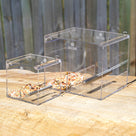
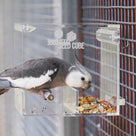
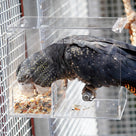
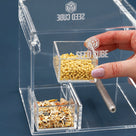
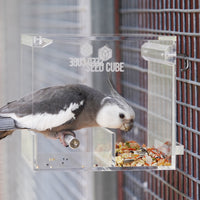
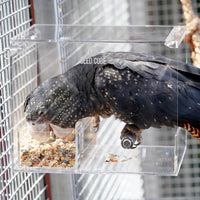
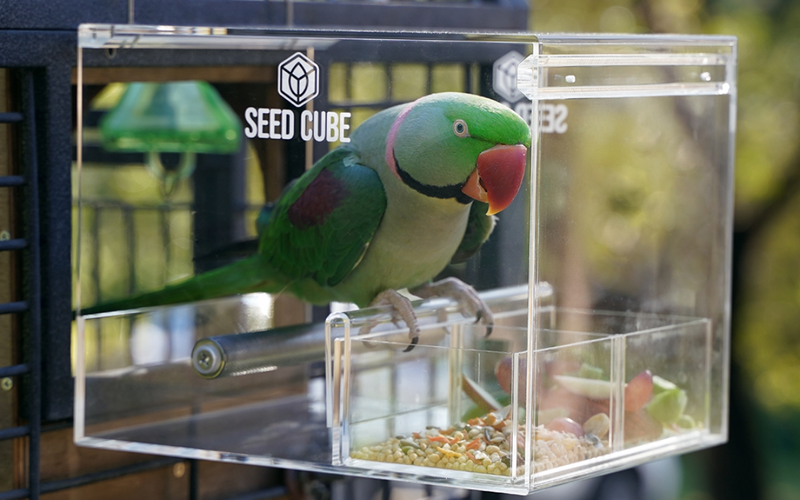
Food mess is the part you can take off the list. Alexandrines suit the Large Seed Cube, which keeps husk and spilt food inside the feeder instead of across the cage floor. During a moult, that means the floor clean-up is mostly feathers.

Moult season checklist

Run through this each day while the moult is on:

  • Scan the cage floor. A few feathers, matched on both sides, with clear quills is normal.
  • Check the head and neck. Ease pin feathers that are dry and flaky, and leave any that feel stiff and waxy.
  • Offer a shallow bath or a light mist, and let your bird choose.
  • Keep the pellet-led diet steady, with a calcium source available.
  • Keep styptic powder or cornflour where you can reach it fast.
  • Book an avian vet for bare skin, one-sided feather loss, misshapen new feathers, or bleeding that lasts more than 2 to 3 minutes.

Key Facts

  • 200 to 300 g

    Adult weight

  • Up to 62 cm

    Head to tail tip

  • Once a year

    Main moult season, usually after breeding

  • 4 to 6 weeks

    For a new feather to mature

  • 15 to 30%

    Rise in metabolic rate during moult

  • 28%

    Share of body protein in feathers (budgies)

  • 2 to 3 minutes

    Bleeding time before you call a vet

Sized for AlexandrinesSeed Cube - Large - No mess bird feeder

Less to sweep in moult season

Seed Cube - Large - No mess bird feeder

$129.99

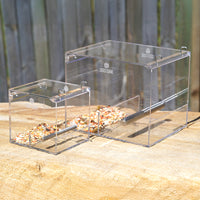
The Large Seed Cube is built for big, forceful eaters like the Alexandrine. Husk and spilt food stay inside the feeder, so through the moult your daily floor clean-up is feathers, not food.

Shop the Large Seed Cube
Seed Cube - Large - No mess bird feeder
Seed Cube - Large - No mess bird feeder $129.99
Shop the Large Seed Cube

Frequently Asked Questions

How often do Alexandrines moult?

One main moult season a year, usually after breeding. Studies of wild rose-ringed parakeets, the Alexandrine's relative, find the big wing feathers can be replaced over more than one season. Lafeber notes parrots drop the odd feather all year, so a few between moults is normal. Indoor birds under household lights can moult less predictably, VCA's avian vets note.

How long does an Alexandrine moult last?

In a pet bird, anywhere from about a month to several months, according to VCA. Each new feather takes about 4 to 6 weeks to mature. If the moult drags on for many months without the plumage ever looking finished, have a vet check diet and health.

Why is my Alexandrine losing so many feathers?

Most likely it is moulting. When the large wing and tail feathers drop, the Association of Avian Veterinarians notes it can look like far more is being lost than really is. Normal loss is gradual, matched on both sides and never leaves bare skin. Bare patches, one-sided loss or damaged new feathers need a vet.

Is moulting painful for my Alexandrine?

A moult is hard work more than it is painful. Metabolism rises by 15 to 30% and many birds become quieter. New pin feathers do have a blood supply and are sensitive to touch, so handle your bird gently, and leave any pin that feels stiff and waxy alone.

Should I remove my Alexandrine's pin feathers?

Only the ready ones on the head and neck, which your bird can't reach itself. Lafeber advises waiting until the sheath looks dry and flaky, then rolling it gently between finger and thumb. Never pull a pin feather out, and leave wing and tail pins alone.

How can I tell if a dropped feather was a blood feather?

Look at the quill. A clear, dry, hollow quill means the feather had finished growing, because the blood supply stops once a feather is fully grown. Dark blue, red or pink inside the quill means it was still growing. Check your bird for bleeding, and see an avian vet if it hasn't stopped within 2 to 3 minutes.

What are the white flakes in my Alexandrine's cage?

Mostly keratin sheath. Each new feather grows inside a sheath of keratin, and VCA's avian vets note the bird preens it away as the feather matures. During a heavy moult the flakes pile up quickly. On their own they are normal. Bare skin or damaged feathers alongside them are not.

What is moult support for birds?

Moult support is diet support for the weeks a bird is growing new feathers. Feathers are the biggest single draw on a bird's protein, and moult raises protein, amino acid and energy needs, so the diet has to cover protein, the sulfur amino acids feathers are rich in, and calcium. For most birds that starts with a pellet-led diet, with any supplement added on vet advice.

Do moulting birds need vitamins or a supplement?

Not always. The MSD Veterinary Manual notes birds that mainly eat formulated pellets usually don't need extra vitamins or minerals unless a vet recommends them. Seed-heavy birds are different. Seed is short of vitamin A, protein (lysine and methionine) and calcium, so those birds need a diet change, and may need a supplement while they switch.

Can I put vitamins in my bird's water during a moult?

The MSD Veterinary Manual advises against it. Supplements in drinking water can change the taste, cut how much the bird drinks, and break down quickly. Put a powdered supplement on a moist food your bird will eat instead, and not on seed, which gets husked.

Do Alexandrines lose their tail feathers during a moult?

Yes, but not all at once. Lafeber notes parrots don't naturally drop all their wing or tail feathers together, because those feathers are vital to survival in the wild. One long tail feather on the floor is normal. A tail that disappears overnight is not, and is worth a vet check.

Do all parrots have a heavy yearly moult?

No. Seasonal breeders such as Alexandrines, ringnecks, eastern rosellas and galahs have one main moult after breeding. Budgies moult continuously through the year, and African greys and Amazons replace feathers fairly steadily. Very large birds can take two years or more to replace their main wing feathers.

When should I take a moulting Alexandrine to the vet?

Go if you see bare skin, loss on one side only, twisted or discoloured new feathers, pins that stay sheathed for weeks, or chewed and pulled feathers. A broken blood feather that is still bleeding after 2 to 3 minutes is urgent. So is a bird that sits fluffed up and stops eating.

Sources

  1. VCA Animal Hospitals: Molting in BirdsBy avian vets Gregory Rich DVM, Laurie Hess DVM and Rick Axelson DVM. Moult pattern (gradual, bilateral, symmetrical), triggers, irregular moults in indoor birds lasting one to several months, and the nutrients in higher demand.
  2. VCA Animal Hospitals: Pin or Blood Feathers in BirdsBlood feather description: the blood supply recedes as the feather matures and stops once it is fully grown; dark blue base, red or pink on small head feathers; the keratin sheath preened away. 4 to 6 weeks to mature, first aid with styptic powder, corn starch or flour, the 2 to 3 minute rule, and why not to pull one at home.
  3. VCA Animal Hospitals: Feather Problems in BirdsDisease causes of feather loss outside a normal moult, including PBFD, polyomavirus, Staphylococcus and Giardia.
  4. Association of Avian Veterinarians: Feather Loss, Cause and TreatmentClient education handout (2014). Feathers are replaced about once a year, a few at a time, never to the point of bare skin; wing and tail moult can look heavier than it is; nutrition and follicle damage from pulling.
  5. Lafeber: Ask LafeberAnswers on easing dry head pin feathers (Jun 2020), why parrots don't drop all wing or tail feathers at once (Feb 2021, lafeber.com/pet-birds/?p=31634), blood flow in wing and tail feathers (Mar 2019), and Dr Tully on PBFD testing in ringnecks (Mar 2023). Bathing guidance from the LafeberVet client handout.
  6. Agriculture Victoria: Alexandrine ParakeetAdult size up to 62 cm and weight 200 to 300 g.
  7. Alan K Jones: MoultingThe Parrot Society UK veterinary advice, based on a presentation to the Association of Avian Veterinarians. Continuous moult in greys and Amazons, 4 to 6 weeks per feather, metabolism 15 to 30% above resting, feathers 20 to 30% of structural protein, calcium, and persistent sheathed quills.
  8. Emu 83(4): 242 to 246 (1983), CSIRO PublishingMoult and plumages of Eastern Rosellas. A single post-breeding moult each year from December to May; budgerigars moult continuously.
  9. Rowley I (1988), Corella 12(4): 109 to 112Moult by the Galah in the wheatbelt of Western Australia. Adults moult November to April; main wing moult about 155 to 185 days; moult starts once breeding is well advanced.
  10. Butler CJ and Gosler A (2004), Ringing & Migration 22: 7 to 12University of Oxford study of rose-ringed parakeets in Britain. Birds in wing moult between May and July, adults moult after breeding, and the main wing moult can take more than a year.
  11. Rohwer S and colleagues (2009), PLOS BiologyWhy large birds take disproportionately longer to replace flight feathers and often spread the main wing moult over two or more years.
  12. Government of South Australia, Department for Environment and Water: Beak and Feather DiseaseFact sheet. PBFD should be considered in any parrot with abnormal feather loss, colour or development; there is no treatment.
  13. Cornell Lab of Ornithology: How Feathers Are BuiltBird Academy. The rachis, barbs and hooked barbules that form a feather's vane, and how preening realigns barbules and spreads oil to keep feathers flexible and waterproof.
  14. U.S. Fish and Wildlife Service Feather Atlas: GlossaryThe calamus, or quill, is the hollow base of the shaft that attaches to the skin; barbs are strands of keratin branching off the rachis.
  15. Lafeber: Avian Nutrition Revisited, Clinical PerspectivesSusan E. Orosz, PhD, DVM, Dipl ABVP (Avian). Feathers are the largest portion of a bird's protein requirement; in budgies feathers equal 28% of total body protein; moult increases protein needs.
  16. LafeberVet: Avian Nutrition BasicsChristal Pollock, DVM, DABVP (Avian Practice). Essential amino acids including lysine and methionine; feathers are enriched in cysteine; moult is associated with increased amino acid and energy needs.
  17. MSD Veterinary Manual: Nutritional Disorders of Pet BirdsLaurie Hess, DVM, DABVP, reviewed May 2026. Pellet-fed birds usually don't need extra vitamins or minerals unless a vet recommends them; no supplements in drinking water; no powders on seed; place supplements on moist food; large vitamin A doses can be dangerous.
  18. Merck Veterinary Manual: Nutrition in PsittacinesProfessional version. Strictly seed diets are suboptimal regardless of supplementation, being deficient in vitamin A, protein (lysine and methionine in particular) and calcium.

Written by

Russell Neale

Russell Neale

Founder, Seed Cube

Russell founded Seed Cube in 2024 after years of cleaning up after messy, flimsy feeders. He keeps three birds at home, including a 12-year-old hand-raised Alexandrine, and designs every product to keep feeding cleaner, safer and built to last.

  • 3 birds at home
  • Est. 2024, Hills District NSW
  • Works with Hills Wildlife Sanctuary
Meet the team

The takeaway

An Alexandrine's moult is big, seasonal and normal. It does most of a year's feather replacement in one stretch, so you notice it far more than you would in a budgie that moults a little all year. Watch for even loss on both sides, keep the diet strong, help with the head pin feathers once they are dry and flaky, and keep styptic powder or cornflour within reach for a broken blood feather.

Bare skin, bleeding that won't stop, and new feathers that grow in wrong are the exceptions. Those go to an avian vet. For the rest of the care picture, read the Alexandrine care guide.