
Feeding and Diet

What to Feed an Alexandrine: A Complete Diet Guide

By Russell Neale, Founder, Seed Cube 9 min read

TL;DR

  • Build the diet on a large parrot pellet, with fresh vegetables and leafy greens every day.
  • An Alexandrine is 200 to 300 g, roughly double an Indian Ringneck, so it needs a bigger food format, not just a bigger serve.
  • Offer the largest pellet size available. Bigger pellets increase foraging and the time a bird spends eating.
  • Asiatic parrots can have a little sunflower in the mix, but never as the base of the diet.
  • Weigh your bird every 2 to 3 days during a conversion and call your vet if it loses 10 per cent of its body weight.

Quick answer

Feed an Alexandrine a diet led by a large parrot pellet, with fresh vegetables and leafy greens offered every day and quality seed as a smaller layer. Add a cuttlebone or mineral block for calcium and green native branches to chew. The detail most guides miss is format. An Alexandrine is the largest parakeet in the world at 200 to 300 g, so choose the largest pellet size available and offer vegetables in big pieces the bird has to work at, rather than simply serving more of a small parrot mix.
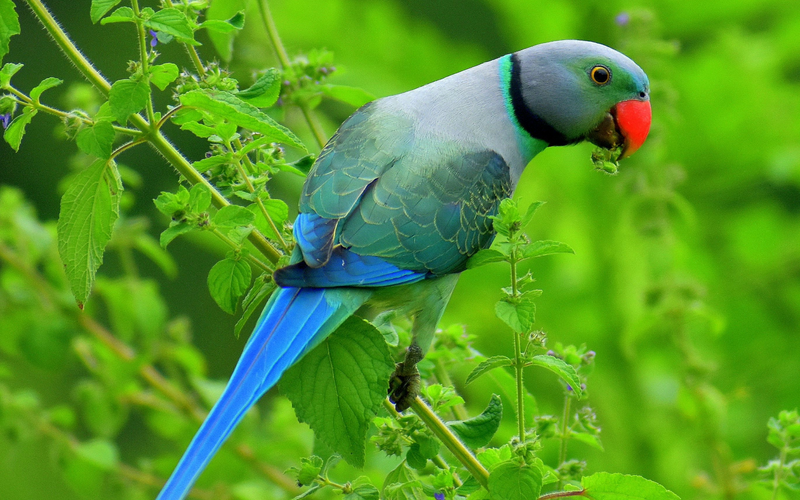
Green Alexandrine parrot feeding at a Large Seed Cube no-mess feeder
An Alexandrine feeding from a Large Seed Cube. Bigger bird, bigger food format, husk kept inside the feeder.

The Alexandrine diet in one picture

Build an Alexandrine's diet on a large formulated pellet, add fresh vegetables and leafy greens every day, and keep seed, nuts and fruit as a smaller layer the bird has to work for. Fresh water, a cuttlebone or mineral block for calcium, and green native branches to chew finish it off.

That much is standard large parrot advice. The part that actually decides whether an Alexandrine thrives is different: this bird is far bigger than the one it is usually fed like, so the size and shape of the food matters as much as the ratio on the label.

Fed like a ringneck, but twice the bird

The Alexandrine is the largest parakeet species in the world. Lafeber states it plainly, and the numbers carry it: a typical adult runs 200 to 300 g against roughly 115 to 140 g for an Indian Ringneck, with a heavier body, a tail that can reach 35 cm on its own, and the biggest beak in the Asiatic group.

Almost none of that shows up in how the bird is fed. Alexandrines are routinely sold a small parrot mix, given a ringneck-sized portion in a ringneck-sized bowl, and left to it. The result is not obvious hunger, which is exactly why it goes unnoticed for years.

Here is the mechanism nobody joins up. A larger bird needs more energy. Give it a small, seed-led mix and it will simply eat more of that mix to get there. Because the fattiest pieces are the ones it picks out first, more mix means more fat, not more nutrition. The bowl empties fast, the owner reads that as a healthy appetite, and the bigger the bird is, the further the diet drifts.

Why bigger format beats a bigger bowl

The fix is to make the food bigger, not the serve. The Unusual Pet Vets are explicit about this for larger parrots, with Alexandrines named among them: offer the largest pellet size available, because a bigger pellet increases foraging behaviour and has been shown to increase the time a bird spends eating. Same nutrition, more work, more of the day occupied.

Apply the same rule to everything else in the cage. Offer vegetables as large pieces the bird has to hold, tear and strip rather than shredded into a bowl. Offer nuts in the shell. Give it green leafy branches to dismantle. An Alexandrine's beak is the largest tool in the Asiatic group, and a bird holding that tool with nothing to use it on will find something, usually your furniture.

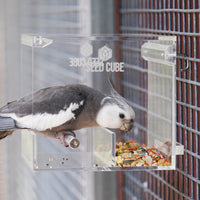
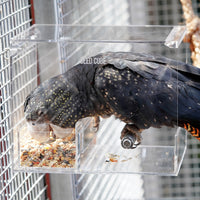
This is also where a contained feeder earns its keep. A bird working at large, hard food throws husk and fragments a long way, and a Large Seed Cube keeps that inside the feeder rather than across the room, so what is left in the dish still tells you something true about what was eaten.

What the pellet percentages actually mean

Owners run into three different numbers and assume two of them must be wrong. All three are correct. They are measured against different things, and nobody says so.

The RSPCA's general guidance is roughly 60 per cent formulated diet and 40 per cent vegetables, with seed and fruit as treats only. That is a share of the whole diet, fresh food included. Currumbin Valley Vet, writing specifically about Asiatic parrots, puts pellets at 80 per cent of the total diet for a fully converted bird. The Unusual Pet Vets describe pellets reaching 50 to 60 per cent, but they are counting the dry food in the bowl during a conversion, with fresh vegetables offered separately alongside it.

So the practical target for a settled adult Alexandrine is a diet led by pellets, with vegetables and greens offered generously every day, and seed as the smallest layer. Chase the pattern rather than the percentage.

The sunflower question, and why Asiatic parrots are the exception

Most Australian bird advice says no sunflower, full stop. For an Alexandrine that is slightly too blunt, and the reason is worth understanding rather than repeating.

Currumbin Valley Vet draws the line by origin. Indian Ringnecks and Alexandrines come from the forests of Asia, not the Australian dry inland. They are canopy feeders on a naturally richer diet of fats and fruits than a galah or a corella, and Currumbin's own guidance is that Asiatic parrots can have sunflower seed in the mix, never excessive, and can be offered nuts such as hazelnut, almond and walnut.

Do not read that as a licence. The Unusual Pet Vets pull sunflower out of the base diet in week one of their conversion protocol and allow it back only as a training or foraging reward, and the RSPCA supplies the reason: sunflower seed is 49 per cent fat, around three times the fat of an average chocolate bar. Both positions agree on the part that matters. Sunflower is not the base of the diet. The Asiatic difference is that a modest amount within a mix is tolerable for this species, not that a sunflower-led bowl is fine.

Vegetables, greens and Australian native browse

Offer fresh vegetables every day. Currumbin's list for Asiatic parrots covers sweet corn, silver beet, spinach, beans, peas, celery and sprouted seeds such as bean and alfalfa sprouts.

The deep green and orange vegetables, sweet potato, carrot, pumpkin, broccoli and brussels sprouts, should be lightly steamed first. Steaming breaks down the cellulose and makes them more digestible, and offering them warm the first few times makes a suspicious bird far more likely to try them at all.

Wild greens cost nothing and are usually well accepted: milk thistle, green grass seeds, chickweed, dock and dandelion. For chewing, cut green leafy branches from Australian natives. Wattle, bottlebrush, melaleuca, grevillea, ti-tree, gum, lilly pilly, banksia and acacia all work. For a bird with this beak, browse is not decoration. It is the closest thing in a cage to the job the beak was built for.

Nuts, fruit and keeping seed fresh

Nuts suit an Alexandrine better than they suit most Australian parrots of similar size, because this is a forest canopy species rather than a dry inland one. Currumbin lists hazelnut, almond and walnut as good choices and advises against peanuts. Keep nuts as a treat and a foraging reward rather than a daily ration, because the fat adds up quickly in a bird already inclined to put on weight.

Fruit can be varied and seasonal: apple, orange, banana, grapes, melon, strawberry, kiwifruit, pawpaw, mango, lychee and stone fruit. Remove stone fruit pits before you offer them.

One detail that almost never gets mentioned. Store seed and nuts in sealed containers, refrigerated or frozen. Fat goes rancid, and a warm Australian shed is the worst place for a bag of high-oil seed.

Converting an adult Alexandrine, week by week

Alexandrines convert more easily than most, and The Unusual Pet Vets say so directly. The larger, inquisitive species that already accept human foods, Alexandrines named among them, will often take pellets placed straight into the existing seed dish, particularly if the pellets are first offered as a high-value treat from your plate.

If yours is stubborn, use the staged version. Week one, take sunflower out of the base diet and keep it only as a reward. Week two, drop dried corn and safflower and move to a lower fat mix built on Japanese millet, white French millet, canary seed and panicum. Week three, finely shred leafy greens, carrot and capsicum through that mix. Week four, cut the seed back and start offering whole vegetables in interesting ways. Week five, crush pellets into the mix. Week six, move vegetables out to large separate pieces and let pellets take over the bowl.

Weigh the bird every second or third day, first thing in the morning, and write it down. Contact your vet if it has lost more than 10 per cent of its body weight. A conversion is only working if the bird is actually eating, and the scales are the only honest way to know that.

Foods to avoid

Avocado and chocolate are toxic to parrots and must never be offered.

Beyond those, Currumbin's line is worth repeating in full: never feed fatty, salty or processed human foods, never feed dairy such as butter, cheese or milk, and never feed tea, coffee or alcohol. Birds do not have the metabolism to cope with any of it.

This matters more for an Alexandrine than for a quieter species. They are affectionate, sociable birds that treat the household as their flock and want to eat whatever you are eating. That is precisely why the rule has to be yours rather than theirs.

Key facts

  • 200 to 300 g

    Typical adult Alexandrine weight, roughly double an Indian Ringneck

  • Largest

    Parakeet species in the world, per Lafeber

  • 49%

    Fat in sunflower seed, about three times a chocolate bar

  • 80%

    Pellet share of a fully converted Asiatic parrot's diet

  • Every 2 to 3 days

    How often to weigh your bird during a diet conversion

  • 10%

    Body weight loss that means stop and call your vet

Seed layerForage Gourmet Seed - Alexandrine & Ringneck Specialty Blend-Bird Seed-Seed Cube

Forage Gourmet

Forage Gourmet Seed - Alexandrine & Ringneck Specialty Blend

$15.99

Our Alexandrine & Ringneck blend is the seed layer for an Asiatic parrot, sized and balanced for a bird this big rather than borrowed from a small parrot mix. Pair it with a large parrot pellet and daily vegetables, and load it into the Large Seed Cube so the husk stays in the feeder instead of on the floor.

Shop Alexandrine & Ringneck blend
Forage Gourmet Seed - Alexandrine & Ringneck Specialty Blend-Bird Seed-Seed Cube
Forage Gourmet Seed - Alexandrine & Ringneck Specialty Blend $15.99
Shop Alexandrine & Ringneck blend

Frequently asked questions

What should an Alexandrine eat every day?

A large formulated pellet as the base, fresh vegetables and leafy greens every day, and a smaller layer of quality seed. Add a cuttlebone or mineral block for calcium, fresh water daily, and green native branches to chew. Nuts and fruit are treats rather than staples.

Can Alexandrines eat sunflower seeds?

In small amounts, yes, and this is one of the few Australian-kept parrots where that is true. Currumbin Valley Vet notes that Asiatic parrots such as Alexandrines and Indian Ringnecks come from Asian forests and are canopy feeders on a naturally richer, fattier diet than dry inland Australian parrots, so sunflower in the mix is acceptable provided it is never excessive. It should never be the base of the diet. Sunflower seed is 49 per cent fat, roughly three times an average chocolate bar, and if your bird is picking it out first, move it out of the bowl and use it as a training or foraging reward instead.

How much should I feed an Alexandrine?

Feed to the bird rather than to a fixed measure, and judge it on weight rather than on how fast the bowl empties. An Alexandrine is a big parakeet at 200 to 300 g, so it does need more than a ringneck, but the answer is a larger format of the right food, not a larger serve of a small parrot mix. Weigh your bird regularly, first thing in the morning, and adjust from there. If you are unsure whether yours is overweight, an avian vet can body-condition score it in a few minutes.

Can Alexandrines eat peanuts?

Currumbin Valley Vet recommends nuts for Asiatic parrots but specifically advises preferring hazelnut, almond and walnut over peanuts. Whichever nut you use, keep it as an occasional treat rather than part of the daily ration, serve it raw and unsalted, and store nuts sealed and refrigerated or frozen so the fat does not go rancid.

What vegetables can Alexandrines eat?

Sweet corn, silver beet, spinach, beans, peas, celery, and sprouted seeds such as bean and alfalfa sprouts can all be offered raw. Lightly steam the deep green and orange vegetables first, meaning sweet potato, carrot, pumpkin, broccoli and brussels sprouts, because steaming breaks down the cellulose and makes them more digestible. Offering them warm the first few times helps a hesitant bird try them. Wild greens including milk thistle, chickweed, dock and dandelion are also well accepted.

How do I convert an Alexandrine to pellets?

Many Alexandrines convert easily. The Unusual Pet Vets note that larger, inquisitive species like this one will often take pellets placed straight into the existing seed dish, especially if offered first as a high-value treat from your plate. For a stubborn bird, work through their staged protocol over about six weeks: remove sunflower, then dried corn and safflower, move to a lower fat millet-based mix, shred greens through it, introduce whole vegetables, then crushed and finally whole pellets. Offer the largest pellet size available, because bigger pellets increase foraging and time spent eating. Weigh the bird every second or third day and contact your vet if it loses more than 10 per cent of its body weight.

Do Alexandrines need a cuttlebone or grit?

A calcium source, yes. Currumbin recommends mineral supplementation in the form of shell grit, oyster shell or cuttlefish bone for Asiatic parrots, and it is cheap insurance, particularly for hens. Note that this is a calcium source, not a digestive aid. A parrot shells its seed before swallowing the kernel, so it does not need insoluble stone grit to grind food in the gizzard the way a bird that swallows seed whole does. Birds on a pelleted diet get their vitamins from the pellets; birds on seed-based diets need vitamin supplementation as well.

What foods are toxic to Alexandrines?

Avocado and chocolate are toxic and must never be offered. Also avoid caffeine and alcohol, all dairy including butter, cheese and milk, and any fatty, salty or processed human food, because birds do not have the metabolism to handle them. Remove stone fruit pits before offering the fruit. If you think your bird has eaten something toxic, contact an avian vet immediately rather than waiting for symptoms.

Sources

  1. Currumbin Valley Bird, Reptile and Exotic Veterinary ServicesDietary Advice for Asiatic Parrots (Indian Ringnecks, Alexandrines etc.), last updated 3 April 2023. The species-specific spine of this guide. Used for the canopy-feeder origin argument and the richer fat and fruit diet of Asian forest parrots relative to Australian dry inland parrots, the position that Asiatic parrots may have sunflower in the mix but never excessively, the 80 per cent pellet target for a converted bird, the nut guidance preferring hazelnut, almond and walnut over peanuts, the vegetable and lightly-steamed lists, the wild greens and Australian native browse species, the mineral supplementation guidance, and the toxic and never-feed lists.
  2. The Unusual Pet Vets, Converting Your Parrot Off a Seed-Only DietAustralian exotic and avian veterinary practice client handout, October 2024. Used for the week-by-week conversion protocol, the finding that larger inquisitive species including Alexandrines often accept pellets placed straight into the existing seed dish, the recommendation to offer the largest pellet size available because it increases foraging behaviour and time spent eating, the instruction to weigh the bird every second or third day first thing in the morning, and the 10 per cent body weight loss threshold for contacting the clinic.
  3. RSPCA Australia KnowledgebaseWhat should I feed my birds? Used for the sunflower seed figure of 49 per cent fat, about three times the fat of an average chocolate bar, and for the general guidance of roughly 60 per cent formulated diet and 40 per cent vegetables with seed and fruit as treats only.
  4. Lafeber Pet Birds, Alexandrine ParakeetSpecies profile. Used for the Alexandrine being the largest parakeet species in the world, its native range from eastern India through to Sri Lanka, the tail length reaching around 35 cm, the lifespan of more than 30 years with good care, and the pelleted base diet supplemented with fruit and vegetables.

About the author

Russell Neale
Founder, Seed Cube

Russell Neale is the founder of Seed Cube, a bird-feeding brand he started in 2024 in the Hills District of NSW. A long-time bird owner himself, with three birds including a 12-year-old hand-raised Alexandrine, Russell built Seed Cube after years of frustration with messy, flimsy and poorly designed feeders.

Seed Cube makes practical, durable products that keep feeding cleaner, easier and safer for pet birds, and that are designed to last rather than end up in landfill. The brand works closely with Hills Wildlife Sanctuary, and everything it makes is BUILT FOR BIRDS™.

Get the format right and the rest of the Alexandrine diet falls into place. Lead with a large parrot pellet, offer fresh vegetables and greens every day, keep seed and nuts as the smaller working layer, and give the biggest beak in the Asiatic group something worth using. Weigh the bird, not the bowl.

For the full picture on housing, handling and health, read the Alexandrine care guide, and see how the Large Seed Cube alexandrine feeder keeps the husk from a big, forceful eater inside the feeder instead of across the room.

See the alexandrine feeder