
Feeding and Diet

What to Feed a Canary: A Complete Diet Guide

By Russell Neale, Founder, Seed Cube 5 min read

TL;DR

  • Feed a canary like a finch, not a parrot: quality seed belongs in the diet, but seed alone is a trap.
  • Balance the seed with daily greens and veg, plus a small canary or finch pellet or egg food.
  • An all-seed diet causes iodine-deficiency goitre, obesity and fatty liver.
  • Add egg food and extra protein through the moult and breeding season.
  • Never feed avocado, and change the water every day.

Quick answer

Feed a canary a quality canary seed mix as the base, with fresh leafy greens and vegetables every day, a small amount of formulated canary or finch pellet or egg-based soft food to cover vitamins, minerals and iodine, and egg food for extra protein through the moult and breeding season. Offer a cuttlebone and fresh daily water. Avoid an all-seed diet, which causes goitre, obesity and fatty liver, and never feed avocado.
Yellow canary, what to feed a canary diet guide
A canary is a finch, so its diet is built on quality seed plus greens, not pellets alone.

A canary is a finch, not a parrot

Most bird feeding advice online is written for parrots, and it usually starts with one rule: switch to pellets. For a canary that advice is only half right. Canaries are finches, natural seed-eaters, and seed genuinely belongs in their diet in a way it does not for a parrot. The catch is that seed alone is still a trap. The winning canary diet is a balance: quality seed, daily greens, a small formulated pellet or egg food, and a little extra protein when your bird is moulting or breeding. Feed a canary like a finch, not a parrot, but never let it live on seed alone.

The healthy canary plate at a glance

Here is the whole diet in one glance. Build the day around these and you cover a canary's needs.

  • A quality canary seed mix as the everyday base.
  • A small amount of formulated canary or finch pellet, or an egg-based soft food, to cover the vitamins, minerals and iodine that seed lacks.
  • Fresh leafy greens and vegetables daily, about a fifth to a quarter of the diet.
  • Egg food for extra protein through the moult and breeding season.
  • A cuttlebone for calcium, and fresh, clean water changed every day.

Seeds: the right role, not the whole diet

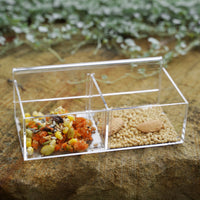
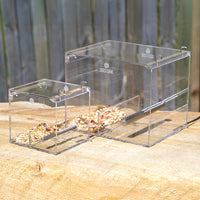
A good canary seed mix is built around canary grass seed, with rapeseed, linseed and a little nyjer. Choose a fresh, quality mix and avoid cheap blends heavy with fatty fillers. The common mistake is not the seed itself but letting your bird eat only its favourites, which are usually the fattiest ones. Offer the mix as a balanced whole and top it up rather than letting the bird dig to the bottom of the dish. Loaded into a contained feeder, seed stays cleaner and the husks stop scattering across the cage.

Pellets and egg food: covering the gaps

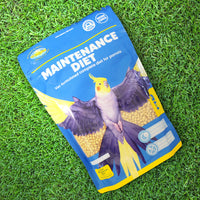
A small formulated component is the simplest way to cover what seed misses. Canary and finch pellets or granules add balanced vitamins, minerals, iodine and protein, and brands such as Lafeber and Vetafarm make them sized for small birds. Canaries are famously stubborn about pellets, so convert slowly: mix a little pellet through the seed and increase it over weeks, never by starving the bird onto it. If your canary simply will not take pellets, an egg-based soft food plus daily variety does much of the same job. Watch that your bird is actually eating throughout any change.

Fresh greens, vegetables and colour feeding

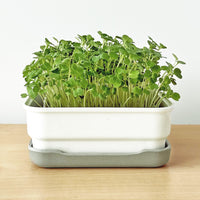
Fresh greens and vegetables should make up roughly 20 to 25 percent of the diet. Good choices include kale, silverbeet, broccoli, endive, dandelion greens, grated carrot and its tops, capsicum and cucumber. Wash everything well and remove it after a few hours so it does not spoil. Skip iceberg lettuce and celery, which are mostly water and add little. If you keep a red-factor canary, carotenoid-rich foods like carrot, capsicum, beetroot and sweet potato help maintain that colour, especially during the moult when new feathers take on their pigment.

The all-seed trap: goitre, obesity and fatty liver

An all-seed diet is the single biggest cause of diet-related illness in canaries. Seed is high in fat and short on vitamins, minerals, protein and iodine. Low iodine drives thyroid hyperplasia, or goitre, where the thyroid swells and presses on the airway. Watch for a clicking or wheezy breath, visible effort to breathe, or regurgitation. On top of that, the high fat load leads to obesity and fatty liver disease over time. The fix is not dramatic: a small formulated or fortified component, daily greens, and sensible portions turn an all-seed diet into a balanced one.

Feeding through the moult, breeding and song

A canary's needs shift through the year. The annual moult, usually after breeding, is demanding work: your bird regrows a full set of feathers over about six to eight weeks and needs more protein to do it well. Offer egg food two or three times a week and keep the variety up. Do not worry if your male goes quiet during the moult, that is normal, and song returns as the new feathers finish. In the breeding season, add egg food, soaked or sprouted seed, and a cuttlebone for the extra calcium hens need for eggs. Good year-round nutrition and a steady daylight rhythm are what keep a male in strong song.

Foods to avoid, water and grit

Some foods are never safe. Avocado is toxic to birds and must be avoided completely, along with chocolate, caffeine, alcohol, salty or processed human foods, and apple seeds or fruit pits. Fresh water should be changed at least once a day, since canaries dunk food and foul it quickly. Offer a cuttlebone for calcium, and if you use grit, a small amount of soluble grit occasionally is enough, there is no need for a constant supply. Keep it simple, keep it varied, and the diet takes care of itself.

Key facts

  • About 20 g

    Typical adult canary weight

  • 20 to 25%

    Share of the diet from greens and veg

  • 6 to 8 weeks

    Time to regrow feathers in the annual moult

  • All-seed

    The diet behind goitre, obesity and fatty liver

Seed layerForage Gourmet Seed - Finch & Canary Specialty Blend-Bird Seed-Seed Cube

Forage Gourmet

Forage Gourmet Seed - Finch & Canary Specialty Blend

$15.99

Our Finch & Canary blend is the quality seed layer for a canary's diet, a balanced mix to pair with daily greens and a small formulated pellet. Load it into the Small Seed Cube to keep the husks contained.

Shop Finch & Canary blend
Forage Gourmet Seed - Finch & Canary Specialty Blend-Bird Seed-Seed Cube
Forage Gourmet Seed - Finch & Canary Specialty Blend $15.99
Shop Finch & Canary blend

Frequently asked questions

Can canaries live on seed alone?

No. Seed alone is low in vitamins, minerals, protein and iodine, and an all-seed diet is the main cause of goitre, obesity and fatty liver in canaries. Seed can be a major part of the diet, but it needs daily greens and a small pellet or egg food alongside it.

What is the best seed for a canary?

A quality mixed canary seed built around canary grass seed, with rapeseed, linseed and a little nyjer. Choose a fresh mix and avoid cheap, fatty blends. Offer it as a balanced whole rather than letting your bird pick out only its favourite seeds.

Do canaries need pellets?

Pellets are not strictly essential, but a small amount of canary or finch pellet is the easiest way to supply the iodine, vitamins and minerals that seed lacks. If your canary refuses pellets, an egg-based soft food plus daily fresh greens does much of the same job.

What vegetables and greens can canaries eat?

Kale, silverbeet, broccoli, endive, dandelion greens, grated carrot and carrot tops, capsicum and cucumber are all good. Wash them well and remove them after a few hours. Avoid iceberg lettuce and celery, which offer very little nutrition.

Can canaries eat fruit?

Yes, in small amounts as a treat. Try apple without the seeds, berries, melon or a little orange. Keep fruit occasional rather than daily, as it is high in sugar, and always remove pits and apple seeds, which are not safe.

What can canaries not eat?

Never feed avocado, which is toxic to birds. Also avoid chocolate, caffeine, alcohol, salty or heavily processed foods, and apple seeds or fruit pits. When in doubt, leave it out.

What should I feed a canary during the moult?

Up the protein. Offer egg food two or three times a week, keep greens and vegetables varied, and make sure a cuttlebone is available. This supports strong feather regrowth over the six to eight weeks of the moult. It is normal for a male to sing less until the new feathers finish.

How much should I feed a canary, and do they need grit?

A canary eats roughly one to two teaspoons of seed a day, plus fresh greens. Top the feeder up rather than overfilling it, and offer a cuttlebone for calcium. Grit is optional: a little soluble grit now and then is fine, but a constant supply is not needed.

Sources

  1. Canaries - Feeding, VCA Animal HospitalsVeterinary guidance on canary diet, greens and foods to avoid
  2. Switching from Seeds to Pellets, Lafeber CompanyOn converting seed-eating birds onto a formulated diet
  3. Nutritional Disorders of Pet Birds, Merck Veterinary ManualIodine deficiency, goitre and obesity on all-seed diets
  4. Where Avian Nutrition and Health Intersect, University of Illinois College of Veterinary MedicineDiet-related disease in pet birds

About the author

Russell Neale
Founder, Seed Cube

Russell Neale is the founder of Seed Cube, a bird-feeding brand he started in 2024 in the Hills District of NSW. A long-time bird owner himself, with three birds including a 12-year-old hand-raised Alexandrine, Russell built Seed Cube after years of frustration with messy, flimsy and poorly designed feeders.

Seed Cube makes practical, durable products that keep feeding cleaner, easier and safer for pet birds, and that are designed to last rather than end up in landfill. The brand works closely with Hills Wildlife Sanctuary, and everything it makes is BUILT FOR BIRDS™.

Feed a canary like the finch it is: quality seed as the base, daily greens and vegetables, a small pellet or egg food to fill the gaps, and more protein through the moult. Steer clear of the all-seed diet and its risks of goitre, obesity and fatty liver.

Ready to keep the seed tidy? See the Canary Feeder, or read the full Canary Care Guide for housing, health and song.

Shop the Canary Feeder